
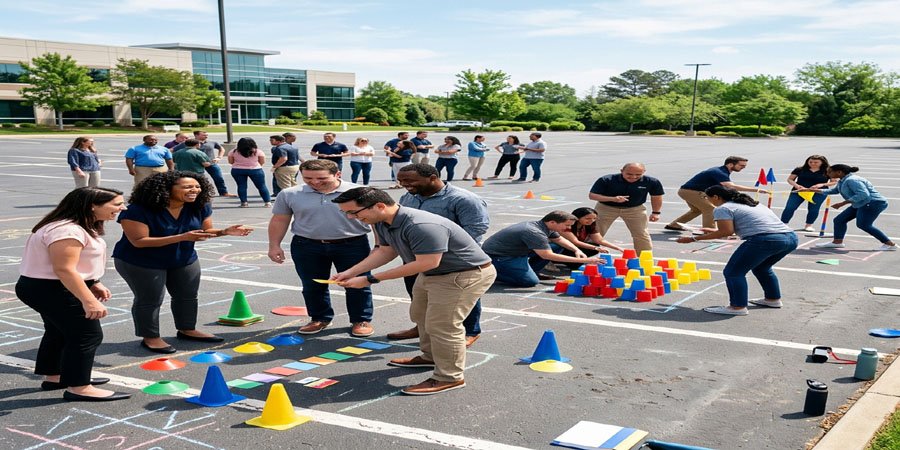
Are you in search of Parking Lot Games?
Outdoor group challenges are practical tools for building trust, sparking friendly competition, and developing workplace skills. Using a parking lot provides a neutral space free from distractions that can help people focus on teamwork and communication. These activities usually take just a few minutes but offer lasting insights. Many teams find outdoor sessions refreshing and a simple way to connect away from their desks.
In this article, let’s see some Parking Lot Games for your teams.
Here is an overview of the sections in this article:
- Key things to review before you run these activities.
- Ten simple exercises with setup details, steps, and debrief prompts.
- Frequently Asked Questions about planning, safety, and use at work.
So, let’s get started!
What Should You Consider Before Conducting These Activities?
Before you begin, review these practical tips to help the session stay safe, smooth, and useful.
Check the Space for Safety
Walk through the area before anyone starts moving. Look for cars, loose gravel, oil spots, sharp edges, drains, and blind corners. Mark clear boundaries for play. Choose a low-traffic time. A safe setup helps people relax, participate fully, and focus on the task.
Match the Activity to Your Goal
Pick the exercise based on your purpose, not just fun. Some options build trust. Others improve listening, planning, or creative thinking. When the goal is clear, your instructions become sharper. Participants also understand why the activity matters to their daily work.
Keep Rules Short and Clear
People engage faster when directions are brief and easy to follow. Explain the aim, time limit, boundaries, and success marker. Demonstrate one step if needed. Clear rules reduce confusion, save minutes, and make the activity feel fair for everyone involved in it.
Plan for Different Comfort Levels
Not everyone enjoys fast movement or public speaking. Offer roles that fit varied comfort levels, such as timekeeper, caller, observer, or recorder. Build activities with simple choices. This makes participation easier while still keeping the experience active, inclusive, and meaningful.
Leave Time for Reflection
The activity is only part of the value. The discussion after it helps people connect action with insight. Ask what worked, what felt hard, and what they noticed. A short debrief turns a fun exercise into a practical workplace learning moment.
10 Parking Lot Games for Teams
Here are some Parking Lot Games you can try with your teams.
#1. Cone Path Challenge
This activity asks participants to guide one another through a marked route without stepping outside the path. It works well for building listening, trust, and calm communication under light pressure.
Time: 10-20 minutes
Materials: Cones and Blindfolds
Participants: 3-8 people per group
Instructions
- Set up a simple path with cones, leaving enough room for safe walking.
- Choose one person to wear a blindfold while the group gives verbal directions.
- Allow only one speaker at a time, for example, one caller can say “two steps forward” or “turn left.”
- Rotate roles after each round so everyone tries guiding, moving, and observing.
Debrief
- What helped the directions feel clear and useful?
- How did the blindfolded person decide whom to trust?
- What does this activity show about communication at work?
You can also read:
50 Awesome Team Building Activities (Workplace)
#2. Parking Spot Puzzle Relay
In this exercise, participants race to assemble a simple puzzle inside a marked parking space. It encourages planning, role clarity, and quick adjustment when the first idea does not work.
Time: 10-20 minutes
Materials: Masking Tape, Puzzle Pieces, and Stopwatch
Participants: 3-8 people per group
Instructions
- Mark a parking spot as the play zone, then place mixed puzzle pieces at one end.
- Ask the team to carry pieces one at a time into the zone before assembly begins.
- Set a short time limit, for instance, ten minutes, so the team must balance speed with accuracy.
- Repeat the round with a new strategy after a quick reset.
Debrief
- Which role choices improved the result most?
- When did the plan need to change during the task?
- How can this kind of relay mirror project work?
#3. Silent Line-Up Sprint
This quick challenge requires participants to line up in a specific order without speaking. It develops nonverbal communication, observation, and shared problem-solving in a playful way.
Time: 10-20 minutes
Materials: Task Cards and Cones
Participants: 3-8 people per group
Instructions
- Give each group a task card with a line-up prompt such as birthday month or years at the company.
- Mark a start area so everyone begins from the same point.
- Tell the group they cannot speak, for example, they may gesture, point, or signal with fingers.
- Check the final order, then run a second round with a harder prompt.
Debrief
- Which silent signals worked best during the line-up?
- What made the process easier or harder without speech?
- Where do you rely on nonverbal cues in daily work?
#4. Number Grid Dash
Participants must step on numbered spaces in the correct sequence while supporting one another from the sidelines. This game sharpens focus, memory, and quick learning after mistakes.
Time: 10-20 minutes
Materials: Sidewalk Chalk, Number Cards, and Stopwatch
Participants: 3-8 people per group
Instructions
- Draw a numbered grid on the ground with chalk, mixing the numbers across the space.
- Ask one team member at a time to move through the grid in order.
- If someone steps on the wrong number, for instance, number 7 before number 6, restart that turn.
- Continue until each person completes the sequence or the timer ends.
Debrief
- How did the team support each player during the dash?
- What patterns helped people remember the sequence?
- What can mistakes teach during fast-paced tasks?
#5. Reverse Parking Story Build
This game blends movement with creativity by asking participants to build a story one line at a time while moving backward into marked spaces. It encourages listening, imagination, and flexibility.
Time: 10-20 minutes
Materials: Parking Space Markers and Prompt Cards
Participants: 3-8 people per group
Instructions
- Mark several parking spaces in a row and place one prompt card in each space.
- Use prompts to shape the tale, for example, “deadline,” “customer,” or “surprise change.”
- Have the group move backward into the next space, then add one sentence to a shared story.
- End after everyone has contributed at least once, then invite a final retelling.
Debrief
- What helped the story stay connected from person to person?
- How did surprise prompts affect the flow?
- When does your workplace need this kind of flexible thinking?
#6. Supply Shuttle Stack
Participants move materials across a parking area to build the tallest free-standing stack they can. The exercise highlights coordination, resource use, and the value of simple planning before action.
Time: 10-20 minutes
Materials: Paper Cups and Tape
Participants: 3-8 people per group
Instructions
- Place building materials at one end of the space with a marked build zone at the other end.
- Tell the team to shuttle items across before building starts.
- Allow a short planning break, for example, one minute, so the team can decide roles and structure.
- Measure the final stack when time ends, then discuss what improved stability.
Debrief
- What planning choices made the biggest difference here?
- How did people respond when the stack became unstable?
- What does this reveal about using limited resources well?
#7. Direction Swap Circle
This activity challenges participants to follow changing movement rules while staying alert to new instructions. It is useful for practicing adaptability, attention, and quick response in a light format.
Time: 10-20 minutes
Materials: Cones and Whistle
Participants: 3-8 people per group
Instructions
- Use cones to mark a large circle where the group can move safely.
- Start with one simple rule such as walking clockwise until a signal changes the direction.
- Add new commands over time, for instance, clap once means freeze while two claps mean switch pace.
- Increase complexity slowly, then stop for a final successful round.
Debrief
- Which rule changes were easiest to follow?
- How did the group stay alert as complexity increased?
- Where do sudden changes affect work performance most?
#8. License Plate Memory Hunt
Participants study a small set of plate-style codes, then search the area for matching cards from memory. This game supports attention to detail, recall, and shared strategy.
Time: 10-20 minutes
Materials: Code Cards and Clipboard
Participants: 3-8 people per group
Instructions
- Show the team several code cards for thirty seconds, then remove them from view.
- Spread matching cards around the marked area before the hunt begins.
- Ask the team to find the correct cards from memory, for example, AB4, KT9, or PL2.
- Review the results together, then discuss how the team divided the search.
Debrief
- What memory methods helped most during the hunt?
- How did the team divide the area effectively?
- When is careful recall important in your work?
#9. Boundary Crossing Build
This exercise asks participants to move objects across marked lines without stepping over them. It promotes creative problem-solving, shared planning, and smart use of simple tools.
Time: 10-20 minutes
Materials: Rope, Soft Balls, and Buckets
Participants: 3-8 people per group
Instructions
- Mark two boundary lines on the ground with a gap between them.
- Place soft balls on one side, then set an empty bucket on the far side.
- Challenge the group to move every item across without crossing the lines, for example, by tossing, pulling, or guiding with rope.
- Run one practice attempt before the scored round begins.
Debrief
- Which ideas worked best for crossing the boundary?
- How did the group handle failed attempts?
- What does this task suggest about constraints at work?
#10. Quick Route Redesign
Participants create the fastest walking route through a set of checkpoints, then improve it after testing. It builds planning, review, and continuous improvement in a short session.
Time: 10-20 minutes
Materials: Cones and Stopwatch
Participants: 3-8 people per group
Instructions
- Set up several checkpoints across the parking area using labeled cones (A, B, C, D, etc.).
- Ask the team to choose an order for visiting each point before the timed walk begins.
- After the first attempt, for instance, they may change the sequence to save distance or reduce confusion.
- Compare the second result with the first, then note what led to improvement.
Debrief
- What changed between the first route and the second?
- How did the team decide what to improve?
- How can testing small changes help real projects?
Want to Develop Leaders at Every Level of Your Organization?
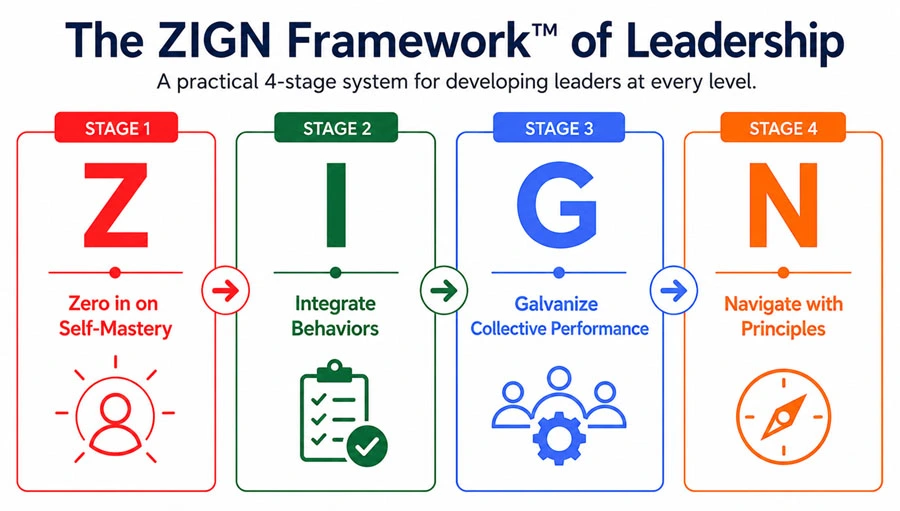
If you want a practical system to develop leaders at all levels, get this master guide and apply our proprietary ZIGN Framework™ of Leadership:
Or Looking for Unique Team Building Activities?
If you want unique activities that help your workforce grow through every stage of team development, get this guide:
Final Words
Parking lot activities can turn a simple outdoor space into a strong learning setting. They help people practice communication, trust, planning, and flexibility in a direct way. The best results come from clear instructions, safe boundaries, and a useful debrief. You do not need complex tools to create a meaningful session. Start with one exercise that fits your goal, then build from there.
FAQ: Parking Lot Games
You might have these questions in mind.
Are these activities suitable for workplace training?
Yes, they fit workplace training very well. These exercises are short, practical, and easy to run. They support skills like communication, trust, planning, and adaptability. When paired with a brief debrief, they become more than fun breaks because they connect action with lessons people can use at work.
How do I keep these activities safe?
Start by checking the area for traffic, slippery spots, and obstacles. Use cones or tape to mark clear boundaries. Choose activities that match the physical comfort of participants. Give simple rules before starting, then monitor movement closely so everyone can stay focused and comfortable during the session.
What if some people do not want active games?
You can offer flexible roles within each activity. Someone can observe, keep time, record ideas, or help explain rules. This approach allows participation without pressure. As comfort grows, many people choose to join more directly because the setting feels supportive, clear, and easy to manage.
Can I use these activities with small departments?
Yes, these activities work well with small departments. Most of them are designed for three to eight people in each set. That size keeps communication manageable while still creating variety in roles. If your department is larger, split people into smaller units and rotate through activities.
How long should the debrief last after each game?
Keep the debrief short but meaningful after each game. In many cases, five to ten minutes is enough. Ask open questions about decisions, challenges, and lessons learned. A focused discussion helps participants connect the activity to real work habits, which makes the experience more useful overall.
Like this article on “10 Parking Lot Games for Teams”? Feel free to share your thoughts.
