
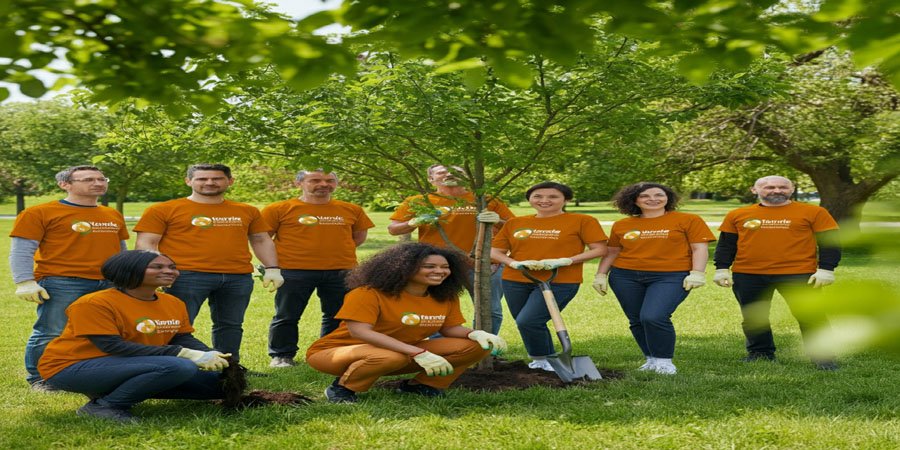
Do you want to conduct the Tree Planting Activity with your teams?
Nature-based interventions offer a unique approach to modern organizational psychology. When individuals leave the sterile office environment to engage with the soil, barriers dissolve naturally. This activity leverages the “biophilia effect,” suggesting humans have an innate tendency to seek connections with nature. Nurturing plants builds shared purpose, replacing competitive individual metrics with a focus on collective care. This grounding activity lowers cortisol, sparks creative problem-solving, and serves as a metaphor for cultivating healthy corporate growth.
In this article, let’s see how you can implement this refreshing exercise.
Here is an overview of the sections in this article:
- Objective of the Activity
- 5 Variations of the Tree Planting Activity
- Tips for Successful Facilitation
- Frequently Asked Questions About the Exercise
So, let’s get started!
Objective of the Activity
This exercise serves as more than just a break from the daily grind; it functions as a strategic intervention for team dynamics. It utilizes the metaphor of cultivation to instill lasting lessons about cooperation, patience, and mutual support.
Let’s look at the primary goals this activity aims to achieve.
Fostering Shared Responsibility
In a corporate setting, individual KPIs often overshadow group success. This activity forces a shift in perspective. A sapling cannot survive without proper soil preparation, careful planting, and watering. No single person can effectively manage all these steps simultaneously in a short timeframe. The team must distribute these tasks. They learn that the final outcome depends on everyone executing their small part with care.
Enhancing Non-Verbal Communication
Physical tasks often require coordination that goes beyond words. Team members must move in sync to handle delicate root balls or heavy soil bags. They learn to anticipate each other’s needs without constant verbal instruction. One person might hold the pot steady while another pours the earth. This silent coordination builds a rhythm of collaboration. It heightens emotional intelligence within the group. Employees become more attuned to the body language of their peers. This awareness translates back to the office as improved empathy.
Developing Patience and Long-Term Vision
Business often demands immediate quarterly results. However, planting a tree is an investment in the distant future. This objective focuses on slowing down the mental pace of the participants. They must accept that their efforts today will yield results years from now. It teaches the value of “process over outcome” in the short term. Participants learn to appreciate the act of starting something significant. This perspective is crucial for strategic planning. It helps teams remain motivated during long projects without instant gratification.
Breaking Down Hierarchical Barriers
Dirt creates a level playing field. When everyone has soil on their hands, job titles matter less. This objective aims to humanize leadership and empower junior staff. A manager might hold the shovel while an intern places the plant. This role reversal can be powerful. It encourages open dialogue that might be stifled in a conference room. The informal setting allows for genuine personality to shine through. It removes the stiffness associated with professional titles.
Strengthening Interpersonal Trust
Trust is the bedrock of high-performing teams. In this activity, you trust your partner not to drop the fragile sapling. You trust them to provide enough water but not too much. These small micro-interactions of reliability build a foundation of safety. When colleagues see each other acting with care toward a living thing, respect grows. It reveals a nurturing side of coworkers that spreadsheets rarely show. This shared vulnerability strengthens bonds.
5 Variations of Tree Planting Activity
Here are 5 variations of the Tree Planting Activity designed to target specific team dynamics.
#1. The Classic Sapling Potting
This version focuses on the fundamental cooperation required to transfer a young tree into a permanent pot. It serves as the baseline for understanding shared effort and careful handling of resources.
Time: You decide
Materials: Small saplings, medium pots, potting soil, trowels, gloves, and water cans
Participants: 3-8 people per group
Instructions
- Ask each team to designate roles such as the holder, the filler, and the waterer.
- Instruct them to gently remove the sapling from its nursery container without disturbing the root system.
- Require them to center the plant in the new pot while others fill the space with soil evenly.
- Direct the team to water the plant until the soil is moist but not saturated. For instance, the waterer must wait for the holder to signal that the plant is stable before pouring.
Debrief
- How did you decide who would take on which role during the process?
- What was the most challenging part of coordinating your physical movements?
- How does the fragility of the plant relate to the fragility of a new project?
You can also read:
50 Easy Team Building Activities (Workplace)
#2. The Assembly Line
This variation turns the planting process into a workflow efficiency challenge. It highlights process improvement, role clarity, and the ability to minimize bottlenecks.
Time: You decide
Materials: Multiple small succulents, small pots, soil scoops, and decorative stones
Participants: 3-8 people per group
Instructions
- Set up a long table where the team must arrange themselves in a linear formation.
- Assign a specific task to each station, such as placing the soil, inserting the plant, or adding stones.
- Challenge the team to pot as many plants as possible within the time limit while maintaining quality.
- Allow the team to stop the clock once to reorganize their line. For instance, they might swap positions if one person is slower than the rest.
Our Experience While Running This Activity: We found that one slow step could hold up the entire planting process. Reviewing how tasks were distributed and adjusting responsibilities helped the team maintain a steadier pace without overlooking the quality of the work.
Debrief
- Where did you notice bottlenecks occurring in your production line?
- How did you communicate the need to speed up or slow down?
- What parallels do you see between this assembly line and your daily office workflows?
#3. The Blindfold Planter
This high-trust variation removes sight to emphasize verbal clarity. It forces the team to rely entirely on explicit instructions and careful listening.
Time: You decide
Materials: Saplings, pots, soil, blindfolds, and protective tarps
Participants: 3-8 people per group
Instructions
- Select one or two active planters who must wear blindfolds throughout the exercise.
- Require the remaining team members to stand back and give verbal directions only.
- Instruct the guides to direct the blindfolded members to find the materials and pot the plant safely.
- Forbid the guides from touching the materials. For instance, they cannot hand the trowel to the planter; they must describe where it is.
Debrief
- How did the lack of sight change the way you listened to instructions?
- What specific words or phrases were most helpful for the blindfolded members?
- How did the guides manage their frustration when tasks took longer than expected?
#4. The Resource Scarcity Challenge
This version introduces constraints to simulate budget cuts or limited resources. It tests negotiation skills and the ability to innovate under pressure.
Time: You decide
Materials: Limited soil, insufficient trowels, shared water source, and various seeds
Participants: 3-8 people per group
Instructions
- Divide the participants into multiple sub-teams that must compete for a central pile of resources.
- Provide less soil and fewer tools than are necessary to complete the job easily.
- Encourage teams to negotiate with other groups to borrow tools or trade materials.
- Award points for the most creative use of limited resources. For instance, a team might use their hands if they cannot trade for a trowel.
A Small Adjustment We Made While Running This Activity: We found that teams could focus on securing their own supplies rather than considering opportunities to share resources. Encouraging them to discuss what they could exchange helped reveal practical ways to overcome shortages.
Debrief
- How did your team decide what resources were most critical to secure first?
- Did the competition for resources hinder or help your final outcome? If so, why?
- How did you handle the negotiation process with the other groups?
#5. The Design and Decorate
This creative variation focuses on branding, marketing, and artistic expression. It is ideal for teams that need to align on a visual identity or message.
Time: You decide
Materials: Plain terracotta pots, paints, markers, saplings, and soil
Participants: 3-8 people per group
Instructions
- Ask each team to come up with a “theme” or “name” for their specific tree.
- Instruct them to paint and decorate the pot to reflect this chosen theme before planting.
- Require the team to present a 30-second pitch explaining why their tree represents the company values.
- Ensure every member contributes to the artwork. For instance, one person draws the logo while another paints the rim.
Debrief
- How did you reach a consensus on the design theme?
- Did everyone feel their creative input was included in the final product? If so, why?
- How does the pot’s design enhance the value of the plant inside it?
Want to Develop Leaders at Every Level of Your Organization?
If you want a practical system to develop leaders at all levels, get this master guide and apply our proprietary ZIGN Framework™ of Leadership:
Looking for Unique Team Building Activities?
If you want unique activities that help your workforce grow through every stage of team development, get this guide:
Need Fresh Team Building Activities Every Month?
If you are a busy leader, get 5 unique, fully customizable activities every month—no preparation or trainer required.
Tips for Successful Facilitation
Leading a nature-based activity requires specific attention to logistics and safety. You must ensure the environment supports engagement rather than distraction.
Here are essential tips to help you guide this session effectively.
Prepare the Physical Space
The environment sets the tone for the entire interaction. You must protect the venue from potential mess. Lay down heavy-duty tarps or plastic sheeting before the team arrives. Ensure there is enough room between tables for people to move freely. Crowded spaces can lead to accidents with tools or soil. Verify that the lighting is adequate for detailed work. If you are outdoors, check the weather forecast. Have a backup indoor location ready in case of rain. A well-prepared space shows participants that you value their time.
Manage the Pacing Strictly
Since this activity is short, time management is critical. You do not want the planting phase to eat into the debrief time. Use a loud, clear timer that everyone can see or hear. Give warnings when there are five minutes and one minute remaining. If groups finish early, have a “bonus round” question ready to keep them engaged. Do not let the energy drag. Keep the momentum high by moving briskly between the instruction and execution phases.
Ensure Inclusivity and Safety
Not everyone is comfortable getting their hands dirty. Provide high-quality gardening gloves for every participant. Check for allergies regarding specific plants, pollen, or latex gloves beforehand. Ensure the tables are at a height that is accessible to everyone, including those who may be seated. If using heavy soil bags, have staff or facilitators lift them. Safety is your priority. Remind participants to handle trowels and other tools with care.
Connect the Metaphor Clearly
The success of this activity lies in the debrief. You must explicitly connect the planting action to business concepts. Do not assume the team will make the connection themselves. Use the “Debrief” questions provided to guide the conversation. Reinforce the idea that the “roots” represent the company culture. Explain that the “leaves” represent the visible results. Frame the “watering” as the ongoing maintenance of relationships. This narrative framing turns a fun break into a learning moment.
Plan for the Plant’s Future
Do not let the activity end when the session is over. You must have a plan for where these plants will go. Will they stay in the office? Can employees take them home? Will they be donated to a local park? Clarify this before you start. If plants are staying in the office, assign a rotation for watering duties. This extends the team-building aspect into the future. It prevents the plants from becoming a burden. Knowing the plant has a future home encourages participants to take the activity seriously.
Final Words
Investing time in nature brings teams closer together in a unique way. This simple activity leaves a lasting physical reminder of collaboration. Teams will remember the experience every time they see a plant in the office. It bridges the gap between individual effort and collective success effectively. Start planning your tree planting session today for better morale.
FAQ: Tree Planting Activity
You might have these questions in mind.
Can we conduct this activity indoors?
Yes, you can easily adapt this for indoor office spaces. You must use drop cloths or tarps to protect the flooring from soil spills. Using smaller pots and focusing on potting seedlings rather than planting large trees makes this perfectly suitable for conference rooms.
What type of plants should we use?
Succulents or small indoor-friendly saplings are the best choices for beginners. They are resilient and require minimal maintenance after the event. Avoid plants that are overly fragile or have thorns, as these can cause frustration or injury during the short activity window.
How do we handle the cleanup efficiently?
Assign a “cleanup crew” role within each team as part of the activity instructions. Provide trash bags, hand wipes, and brooms at every station to facilitate immediate tidying. Making cleanup part of the game ensures the space returns to normal quickly without burdening the facilitator.
Is this activity suitable for senior leadership?
Absolutely, as it levels the playing field and removes corporate hierarchy. Senior leaders often benefit most from tactile, grounding exercises that detach them from high-level strategy. It allows them to connect with staff in a human, unpretentious manner that builds rapport.
Do we need a professional gardener to help?
You do not need a professional for these simple variations. The instructions provided are straightforward enough for any facilitator to lead. However, having a printed guide on how to care for the specific plant species you choose is a helpful takeaway for participants.
Like this article on the “Tree Planting Activity for Teams”? Feel free to share your thoughts.
