
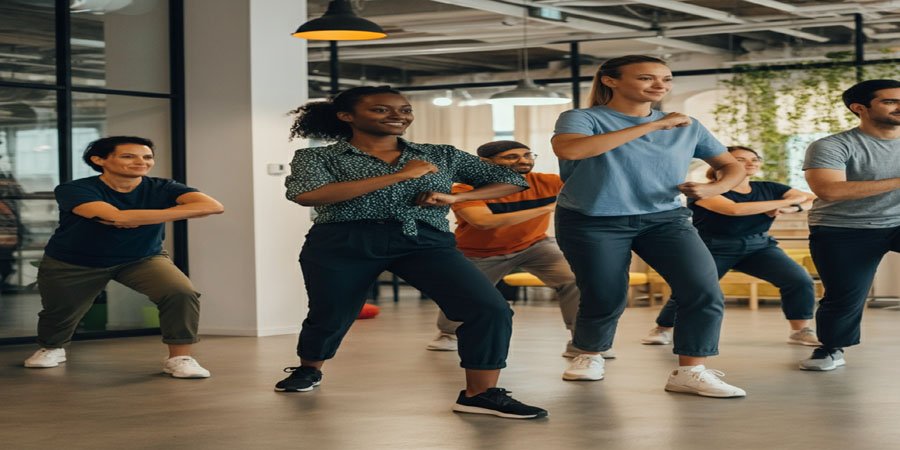
Do you want to conduct the Power Pose Exercise with your teams?
This simple activity can boost confidence and improve team dynamics before important events. It is based on social psychology research suggesting that adopting expansive body postures can change your feelings, behaviors, and even hormone levels. By holding these poses, individuals might feel more powerful and self-assured.
In this article, let’s see how to facilitate this exercise, explore different versions, and lead a meaningful discussion afterward.
Here is an overview of the sections in this article:
- The primary goals of the Power Pose Activity.
- Five distinct variations of the activity, including the classic version.
- Actionable tips for facilitators to ensure a successful session.
- Frequently asked questions about the exercise.
So, let’s get started!
Objective of the Activity
The Power Pose Exercise is designed to be a quick, impactful team-building tool. Its main purpose is to explore the connection between body language and mindset.
Let’s look at the key objectives of this powerful exercise.
Boost Individual Confidence
A primary goal is to help participants feel more self-assured. The exercise encourages individuals to adopt postures associated with power and success. This physical act can trigger a psychological shift, making team members feel more capable and ready to tackle challenges. It’s a practical way to prepare for high-stakes situations like presentations or difficult negotiations.
Enhance Team Cohesion
When a team participates in a shared, positive experience, it strengthens their bond. The exercise is often light-hearted, creating a space for laughter and connection. This shared vulnerability and fun can break down barriers. It helps foster a more supportive and unified team environment where everyone feels more comfortable.
Improve Non-verbal Communication Awareness
This activity highlights the importance of body language. Participants become more conscious of how their posture affects their own feelings. They also learn how it influences how others perceive them. This heightened awareness can lead to more effective communication within the team, as members learn to project confidence and openness through their non-verbal cues.
Increase Energy and Focus
Physically opening up the body can have an energizing effect. This activity serves as an excellent warm-up or a break during long meetings. It can shift the energy in the room from passive to active. This boost helps improve focus, engagement, and overall productivity for the task ahead.
Cultivate a Growth Mindset
The exercise demonstrates that feelings of confidence can be influenced and developed. It encourages a mindset where individuals believe they can change their internal state through deliberate action. This fosters resilience and empowers team members. They learn they are not just passive recipients of their emotions but can actively shape their own sense of capability.
5 Variations of the Power Pose Exercise
Here are 5 variations of the Power Pose Activity you can use with your teams.
#1. The Classic Power Pose
This is the original version of the activity. It focuses on holding static, expansive postures to build individual confidence.
Time: 10-20 minutes
Materials: None
Participants: 3-8 people per group
Instructions
- Ask each team to find a comfortable space where they can stand without touching anyone.
- Instruct participants to adopt a “high-power” pose for two minutes. For instance, they could try the “Wonder Woman” pose by standing with feet apart, hands on hips, and chin tilted up.
- Encourage everyone to breathe deeply while holding their pose, focusing on the feeling of taking up space.
- After two minutes, ask them to switch to a “low-power” pose for one minute, such as sitting hunched over with arms crossed.
Debrief
- How did holding the high-power pose make you feel compared to the low-power pose?
- In what work situations could you discreetly use a power pose to boost your confidence?
- How does this exercise change your perspective on the connection between your body and your mind?
You can also read:
50 Easy Team Building Activities (Workplace)
#2. The Power Pose Mirror
This variation adds a layer of interaction. It helps build rapport and observational skills among team members.
Time: 10-20 minutes
Materials: None
Participants: Pairs
Instructions
- Ask participants to pair up and stand facing each other.
- Designate one person in each pair as the leader and the other as the follower.
- The leader will slowly move through a series of different power poses. For example, they might start with hands on hips and then transition to raising their arms in a “V” shape.
- The follower must mirror the leader’s movements exactly, as if they are a reflection in a mirror. Switch roles after a few minutes.
Debrief
- What was it like to mirror someone else’s movements?
- How did it feel to have your poses mirrored by your partner?
- What did you learn about non-verbal communication from this interaction?
#3. The Group Power Sculpture
This collaborative version encourages teamwork. It requires groups to create a unified and powerful image together.
Time: 10-20 minutes
Materials: None
Participants: 3-8 people per group
Instructions
- Divide the participants into small groups.
- Instruct each group to work together to create a single “sculpture” using their bodies. The sculpture should represent a theme like “Success” or “Triumph.”
- Encourage groups to be creative. For instance, one person might kneel while another stands with a hand on their shoulder, all contributing to the larger image.
- Give the groups a few minutes to plan and then ask them to hold their final sculpture for one minute.
Debrief
- What was the process of creating your group sculpture like?
- How did your group decide on a theme and the individual poses?
- What does your final sculpture say about your team’s idea of power?
#4. The Silent Power Story
This variation uses a sequence of poses. It tells a story without words, focusing on narrative and emotional progression.
Time: 10-20 minutes
Materials: None
Participants: 3-8 people per group
Instructions
- Ask each person to think of a short story about overcoming a challenge.
- Instruct them to represent this story using only three poses: one for the challenge, one for the struggle, and one for the victory.
- Give everyone a few minutes to plan their sequence. For example, the challenge might be a low-power pose, and the victory would be a high-power pose.
- Have participants perform their three-pose story for the group one at a time.
Debrief
- What was it like to tell a story using only your body?
- How did the final victory pose feel after the initial challenge pose?
- What common themes did you notice in the stories shared by the group?
#5. The Power Pose Walk
This dynamic version incorporates movement. It helps participants embody confidence while in motion.
Time: 10-20 minutes
Materials: A clear space for walking
Participants: 3-8 people per group
Instructions
- Ask team members to walk around the room with a slouched, low-power posture for one minute.
- Next, instruct them to change their walk completely. They should now walk with a confident, powerful stride.
- Encourage them to swing their arms, keep their head up, and take up more space as they move. For instance, they can imagine they are walking into an important meeting where they feel completely prepared.
- Let them practice this power walk for a few minutes while music plays in the background.
Debrief
- What differences did you notice between the low-power walk and the high-power walk?
- How could you incorporate a more confident walk into your daily routine?
- When could a “power walk” be useful before a professional event?
Want Some Unique Leadership Development Activities?
If you want some unique activities to equip your employees (both in-person & virtual) with leadership skills, qualities, and mindset, you can get my premium e-book:
Or Want Some Unique Team Building Activities?
If you want some unique activities for your employees (both in-person & virtual), you can get my premium e-book:
Tips for Successful Facilitation
Facilitating the Power Pose Exercise effectively is key to its success. A well-run session ensures participants feel comfortable, engaged, and able to draw meaningful insights from the activity.
Here are some essential tips to guide you.
Create a Safe and Playful Environment
Your first priority is to establish a space where everyone feels secure. Some people may feel self-conscious about striking poses, so it is important to lead with a light and encouraging tone. Start by explaining the science behind the exercise in simple terms. Emphasize that it is an experiment and there is no right or wrong way to do it. Participate in the exercise yourself to show vulnerability. Your involvement will help break the ice and make others more willing to join in.
Provide Clear and Simple Instructions
Avoid jargon and complicated explanations. Break down the activity into small, easy-to-follow steps. For each variation, clearly state the objective and what participants need to do. Use demonstrations to show examples of high-power and low-power poses. This visual guidance is often more effective than verbal descriptions alone. Ensure everyone understands the instructions before starting the timer to prevent confusion during the activity.
Manage Time Effectively
The Power Pose is meant to be a short and impactful activity. Adhere to the recommended time limits for each part of the exercise. Use a timer that is visible or audible to everyone. Sticking to the schedule respects everyone’s time, especially if the exercise is part of a larger meeting or workshop. Holding poses for the suggested two minutes is important for the effect, so be firm with the timing while remaining flexible if the group needs a moment more.
Lead a Thoughtful Debrief
The debrief is where the real learning happens. The poses themselves are just the trigger; the discussion afterward helps participants connect the experience to their work lives. Use open-ended questions that prompt reflection rather than simple yes or no answers. Encourage everyone to share their thoughts but do not force anyone to speak. Acknowledge and validate all responses to foster an atmosphere of psychological safety. Guide the conversation toward practical applications.
Adapt to the Group’s Needs
Be prepared to adjust the activity based on the group’s energy and comfort levels. If you notice significant discomfort, you might switch to a less physically demanding variation like the Power Pose Mirror or shorten the duration. For a more reserved group, starting with individual poses before moving to partnered or group activities can be helpful. Pay attention to both verbal and non-verbal feedback from the room. A successful facilitator is one who is responsive and flexible.
Final Words
The Power Pose Exercise is more than just a physical warm-up. It is a simple yet effective tool for building confidence, improving team dynamics, and enhancing self-awareness. By incorporating these poses into your team meetings, you can create a more positive and empowered work environment. The variations provide flexibility, allowing you to tailor the activity to your team’s specific needs. Ultimately, it encourages everyone to understand the powerful link between their body and their mindset.
FAQ: Power Pose Exercise
You might have these questions in mind.
Is there scientific proof behind power posing?
The original research on power posing showed that it could affect hormone levels and risk-taking behavior. While some follow-up studies have had mixed results regarding the hormonal changes, the psychological effects are more consistently reported. Many people experience a subjective boost in feelings of confidence and power after holding expansive postures.
What if my team members feel awkward doing this?
It is normal for some people to feel self-conscious. Address this by creating a safe, judgment-free zone and explaining the purpose of the activity. Leading by example and participating yourself can also help ease any awkwardness. You can start with a less public variation to build comfort.
Can this exercise be done virtually?
Yes, absolutely. Most variations of the Power Pose Exercise can be easily adapted for virtual teams. Participants can turn on their cameras and perform the poses from their own space. The Group Power Sculpture can be done by having team members use the gallery view to coordinate their poses.
How often should we do this exercise?
The frequency depends on your team’s needs. You can use it as a quick warm-up before important meetings, presentations, or brainstorming sessions. Some teams find it helpful to incorporate it into their weekly check-ins as a regular ritual to boost energy and morale.
Are there any risks or downsides?
The primary risk is participants feeling uncomfortable or silly. This can be mitigated by good facilitation. It is also important to frame the exercise as a tool for self-empowerment, not as a magical solution to deep-seated confidence issues or systemic problems in the workplace.