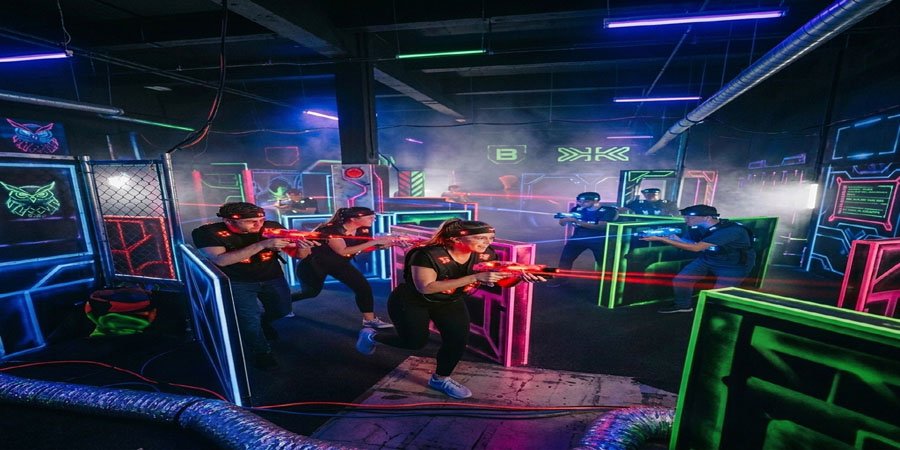
Do you want to conduct the Laser Tag Game with your teams?
This activity draws from experiential learning, social interdependence, role clarity, and shared problem-solving. People learn more when they act, reflect, adjust, then try again. A live arena creates that cycle in a simple format. Participants must read the space, make quick choices, support others, and respond to change. That helps reveal how they communicate, how they handle pressure, and how they work toward a common aim. With smart facilitation, this format can improve trust, sharpen coordination, raise energy, and create useful insight that carries back into daily work after the session.
In this article, let’s see how you can conduct this activity with your teams.
Here is an overview of the sections in this article:
- Objective of the Activity
- 5 Variations of the Laser Tag Game
- Tips for Successful Facilitation
- Frequently Asked Questions about the Exercise
So, let’s get started!
Objective of the Activity
A laser tag session can be much more than a fun break. With thoughtful design, it becomes a short learning experience that helps people communicate clearly, trust others, think strategically, and coordinate under pressure.
Below are the key objectives that make this activity valuable for workplace development.
Improve Communication
Fast play forces participants to share updates in real time. Clear messages help people move with confidence, while vague directions create confusion almost at once. Because the pace is quick, communication habits become easy to spot. A facilitator can then connect those moments to daily work. The lesson is simple: short, timely, direct communication often works best when stakes rise.
Build Trust Under Pressure
Trust becomes visible when one person depends on another in a live setting. A player may need cover before moving, or a timely signal before changing position. If support arrives when needed, confidence grows fast. If it does not, the gap becomes obvious. This makes trust feel practical instead of abstract. People experience what reliable support looks like, which helps the lesson stay with them after the session ends.
Strengthen Strategic Thinking
Success depends on more than speed. Participants must read the arena, notice patterns, choose priorities, then adapt when the original plan stops working. A good approach gives structure, yet flexibility keeps people effective when conditions change. This makes the activity useful for building strategic thinking in a short time. It shows that preparation matters, though rigid plans can fail under pressure. That balance is valuable in projects, meetings, and other shared tasks.
Clarify Roles and Coordination
Different strengths appear quickly during active rounds. One person may lead movement, another may protect key space, while someone else may stay calm when the pace gets intense. These patterns help people see how roles support a shared goal. The activity also reveals whether responsibilities were clear enough from the start. If confusion appears, that becomes a strong discussion point later. Better role clarity often leads to better coordination back at work.
Increase Energy and Connection
Movement, shared tension, and small wins can lift energy fast. People often interact more openly in active settings than in formal rooms. The session creates stories, laughter, and a stronger sense of connection. It can also help quieter participants contribute in new ways. When people leave with a memorable shared experience, bonds often feel stronger. That social boost can improve morale long after the activity is over.
5 Variations of the Laser Tag Game
Here are 5 variations of the Laser Tag Game that work well in short sessions.
#1. Classic Team Match
This is the easiest version to run, so it works well for first-time participants. Two sides compete for the highest score while practicing timing, communication, plus basic tactical thinking.
Time: 10-20 minutes
Materials: Laser tag gear, score system, and play arena
Participants: 3-8 people per group
Instructions
- Give a safety briefing. Review rules and show how to use laser tag gear before the game starts.
- Divide everyone into two teams. Each side picks roles, then reviews how the scoring system works.
- The goal: score more points than the other side by tagging opponents during the set play time.
- When time runs out, the team with the highest score wins. Have a quick discussion to share what worked and what could improve next time.
Debrief
- What helped the players stay aligned during the round?
- How did the side balance caution with forward movement?
- What would they change before the next match?
You can also read:
50 Easy Team Building Activities (Workplace)
#2. Capture the Base
This variation adds a clear target, which makes planning more focused from the start. Each side protects its own base while trying to reach the other one before time ends.
Time: 10-20 minutes
Materials: Laser tag gear, base markers, and play arena
Participants: 3-8 people per group
Instructions
- Mark one home base for each team before the round starts.
- Assign defenders, attackers, plus route watchers so each team has a clear setup.
- Encourage purposeful movement during play. For instance, one player can draw attention while another moves toward the target.
- Finish with a quick reflection on whether each team’s setup supported the mission.
Our Experience While Running This Activity: We found that teams could focus heavily on attacking the opposing base while leaving their own base exposed. Discussing defensive responsibilities before the round helped teams balance offense with protecting their target.
Debrief
- Which role setup helped the side most?
- How did the players decide when to defend versus push ahead?
- What did the round reveal about working toward one shared target?
#3. Mission Challenge Round
This version gives each side a specific task instead of a simple scoring goal. The added mission creates variety, which pushes participants to think in a more flexible way.
Time: 10-20 minutes
Materials: Laser tag gear, mission cards, zone markers, and play arena
Participants: 3-8 people per group
Instructions
- Give each team one mission card before entering the arena.
- Ask participants to plan around the task with clear timing plus role choices.
- Keep the focus on the mission during play. For example, players may need to hold a marked zone for one minute.
- Close the round with a discussion about how each team adjusted when the first plan met resistance.
Debrief
- What part of the mission required the most creativity?
- How did the players adapt when the first plan stopped working?
- What helped the side stay focused on the objective?
#4. Silent Strategy Round
This variation removes spoken communication, which shifts attention to preparation, signals, plus observation. It works well for showing how much coordination depends on nonverbal clarity.
Time: 10-20 minutes
Materials: Laser tag gear, signal cards, and play arena
Participants: 3-8 people per group
Instructions
- Create a few simple hand signals with each team before the round begins.
- Review the meaning of every signal so participants feel ready.
- Run the full round without talking. For instance, a raised hand can mean regroup near cover.
- Debrief where the signals worked well plus where confusion appeared.
Debrief
- How did silence affect coordination during the round?
- Which signals felt most useful under pressure?
- What surprised the players about nonverbal planning?
#5. Leader Rotation Match
This version gives several people a chance to guide the side during one session. Frequent leadership changes help participants notice how direction, tone, plus decision style affect performance.
Time: 10-20 minutes
Materials: Laser tag gear, timer, and play arena
Participants: 3-8 people per group
Instructions
- Set the leadership order before the match begins so each team knows the rotation.
- Change leaders at fixed intervals during the round.
- Follow the active leader’s short plan. For example, one leader can focus on defense while the next pushes for speed.
- Wrap up with a discussion about how each leadership style changed pace, clarity, plus confidence.
What We Learned While Running This Activity: We found that changing leaders could lead to different priorities during the same match. Giving each new leader a moment to communicate their plan helped teammates understand the change in direction and coordinate their actions.
Debrief
- What leadership style helped the side most?
- How did changing leaders affect results?
- Which habits from this round could transfer to work?
Want to Develop Leaders at Every Level of Your Organization?
If you want a practical system to develop leaders at all levels, get this master guide and apply our proprietary ZIGN Framework™ of Leadership:
Looking for Unique Team Building Activities?
If you want unique activities that help your workforce grow through every stage of team development, get this guide:
Need Fresh Team Building Activities Every Month?
If you are a busy leader, get 5 unique, fully customizable activities every month—no preparation or trainer required.
Tips for Successful Facilitation
A lively activity does not create strong learning on its own. The facilitator shapes the value of the session by setting expectations, managing the pace, observing behavior, then guiding reflection with care.
Below are five practical tips that can help the session run smoothly.
Set Expectations Early
Start with a short briefing that explains the purpose of the session. Participants should know whether the focus is trust, communication, leadership, strategy, or connection. Clear expectations help people enter the activity with more intention. They also reduce confusion once the pace rises. If everyone knows the goal, the reflection afterward becomes much richer. A simple opening can shape the whole experience.
Prioritize Safety and Comfort
Safety should come first in every round. Explain the equipment, movement boundaries, arena layout, plus expected behavior before play begins. Make sure participants know they can join at a pace that feels manageable. Some people will feel excited right away, while others may need reassurance. A calm setup helps everyone feel more confident. When people feel safe, they tend to participate more fully.
Choose the Right Variation
Pick the variation that matches the result you want. The classic format works well for easy entry, while the mission round supports problem-solving. The silent version reveals planning gaps fast. The leader rotation format gives people a chance to practice direction in a live setting. If participants are new to this style of exercise, start with the simplest option. Add complexity only after confidence grows.
Watch Behavior, Not Just Scores
Scores tell only part of the story. The richer insight often comes from how people react when plans fail, when pressure rises, or when roles become unclear. Notice who stays calm, who gives useful direction, who supports others, and who adapts quickly. These patterns often reveal more than the scoreboard does. A lower-scoring side may still show strong coordination. Good observation gives the debrief real depth.
Run a Thoughtful Debrief
The debrief is where much of the learning becomes clear. Start with simple questions about what happened during the round. Then move to why it happened, followed by how the same patterns show up at work. You might connect the experience to deadlines, meetings, shifting priorities, plus role confusion. Keep the tone constructive so people feel safe enough to speak honestly. A strong debrief helps participants turn a fun session into practical insight they can use later.
Final Words
The Laser Tag Game can be a lively way to build trust, sharpen communication, and reveal useful work habits. It gives people a shared challenge where timing, support, and decision-making matter right away. With the right setup, even a short session can produce strong learning. The five variations in this article make it easier to match the activity to different goals. A clear debrief helps turn fast action into lasting value.
FAQ: Laser Tag Game
You might have these questions in mind.
Is this activity suitable for workplace team building?
Yes, this activity can work very well for workplace team building when it has a clear purpose. It encourages cooperation, role clarity, trust, and quick communication in a setting that feels playful instead of formal. That relaxed format often helps people engage more openly. The key is to connect what happened in the arena to real work situations during the debrief.
How many participants should be in each round?
A practical size is 3-8 people per group because that range supports involvement without making coordination too hard. Smaller sides give each person more responsibility during the round. Slightly larger sides create more options for strategy and role choice. If more people attend, they can rotate through several short rounds.
What if some participants are not very athletic?
This activity does not depend only on speed. Awareness, timing, communication, planning, and support can matter just as much as movement. Many participants do well by reading the space, spotting openings, then helping others stay aligned. A good facilitator keeps the focus on teamwork instead of physical ability alone.
How can facilitators make the session more meaningful?
Facilitators can begin by naming one clear learning goal before play starts. During each round, they should observe behavior instead of watching only the score. Afterward, they can ask open questions that link the experience to meetings, projects, pressure, or leadership at work. That process helps participants carry the lesson into daily practice.
What safety points should facilitators cover first?
Participants should hear the movement rules, equipment basics, arena boundaries, and behavior expectations before the activity begins. They should also know how to play respectfully in a competitive setting. A short safety briefing reduces confusion, lowers risk, and helps everyone feel more comfortable. Clear supervision during play supports a smoother experience for all.
Like this article on the “Laser Tag Game for Teams”? Feel free to share your thoughts.
