
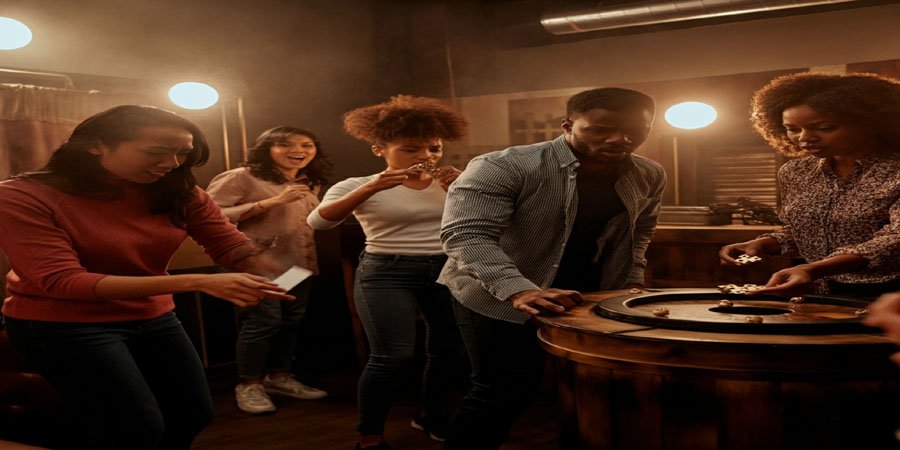
Do you want to conduct the Escape Room Activity with your teams?
This activity is based on experiential learning theory, where teams solve problems in a simulated environment. This hands-on approach enhances critical thinking and collaboration skills more effectively than passive learning. Participants work together to communicate, strategize, and adapt to achieve a shared goal, reflecting real workplace challenges. The experience also fosters stronger interpersonal connections.
In this article, let’s see how to run this engaging team building game.
Here is an overview of the sections in this article:
- Objective of the Activity
- 5 Variations of the Escape Room Activity
- Tips for Successful Facilitation
- FAQ About the Activity
Objective of the Activity
Escape room activities offer more than just fun; they are powerful tools for team development. They create a unique environment where team dynamics can be observed, challenged, and improved.
Let’s explore the key objectives this activity aims to achieve for your teams.
Enhancing Problem-Solving Skills
At its core, an escape room is a complex puzzle. Teams must analyze information, identify patterns, and think critically under pressure. This activity encourages participants to approach problems from multiple angles. It pushes them to devise creative solutions when faced with unexpected obstacles.
Improving Communication
Success in an escape room is impossible without clear communication. Team members need to share clues, listen to each other’s ideas, and coordinate their actions effectively. The activity highlights the importance of both speaking clearly and listening actively, preventing vital information from being lost.
Fostering Collaboration
Escape rooms require seamless teamwork. Participants quickly learn that individual efforts are not enough. They must combine their unique skills and perspectives to solve the series of challenges. This shared struggle for a common goal strengthens their ability to work together on future projects.
Boosting Time Management
With a ticking clock, teams must prioritize tasks, manage their time efficiently, and make quick decisions. This element of urgency teaches them to allocate resources wisely. It helps them focus on the most critical puzzles to ensure they complete the objective before time runs out.
Building Team Cohesion
The shared experience of tackling challenges and achieving a goal together creates strong bonds. It is a memorable event that builds camaraderie and boosts morale. This positive shared memory can translate into a more supportive and connected team environment back in the workplace.
5 Variations of the Escape Room Activity
Here are 5 variations of the Escape Room Activity you can try with your teams.
#1. The Classic Office Escape
In this version, a team is “locked” in a meeting room and must solve a series of puzzles to find the key or code to “escape.” The challenges are hidden around the room using everyday office items.
Time: 10-20 minutes
Materials: Padlock with a combination, puzzle clues, pens, paper, and common office supplies
Participants: 3-8 people per group
Instructions
- Prepare a series of logical puzzles, riddles, or ciphers, with the answer to one puzzle leading to the location of the next.
- Hide the clues around a designated room, using objects like books, drawers, or behind pictures. For instance, a riddle’s answer could be “keyboard,” where the team will find their next clue.
- Set a final master puzzle that reveals the combination to a padlock on a box or the door itself.
- Explain the scenario to the team, start the timer, and let them begin their search for the first clue.
Debrief
- How did you decide which clues to prioritize?
- What was the most challenging part of communicating under pressure?
- Which team member’s contribution was most crucial to a breakthrough?
You can also read:
Crossing the River Activity for Teams (With Debrief)
Start Stop Continue Exercise for Teams (With Debrief)
Word Association Game (With Instructions & Debrief)
#2. The Digital Escape
This virtual version uses online tools to create a digital “room” with puzzles embedded in documents, images, and websites. Teams work together remotely to navigate the digital landscape and find the final password.
Time: 10-20 minutes
Materials: A shared document (e.g., Google Docs), online puzzle maker, and video conferencing software
Participants: 3-8 people per group
Instructions
- Create a central document with a narrative and the first link or puzzle.
- Design a series of digital challenges, such as a password-protected file, a puzzle hidden in an image’s metadata, or a riddle on a specific webpage. For example, a question might lead them to a specific company webpage to find a number.
- Structure the puzzles so that solving one unlocks the next step in the digital journey.
- Gather the team on a video call, share the link to the starting document, and let them collaborate to find the final escape code.
Debrief
- How did you ensure everyone was on the same page while working digitally?
- What strategies did you use to keep track of clues and information?
- What could have made your virtual collaboration more efficient?
#3. The Scavenger Hunt Escape
This variation combines elements of an escape room with a scavenger hunt, sending teams to different locations within the office or a designated area. Each location holds a piece of a larger puzzle they must solve to “win.”
Time: 10-20 minutes
Materials: Clue cards, various physical objects as puzzle pieces, and a map of the area
Participants: 3-8 people per group
Instructions
- Create a map and a set of clues that lead teams to different physical locations.
- At each spot, leave a puzzle piece or another clue. For instance, a location could be the coffee machine, where a riddle is taped to the side.
- Design the final challenge to require all collected pieces or information to be solved.
- Give each team the first clue and let them follow the trail to gather what they need to solve the final puzzle.
Debrief
- How did you coordinate your search across different locations?
- Did your team create a strategy before you started moving? If so, why?
- At what point did your team feel the most in sync?
#4. The Silent Escape
In this challenging twist, participants are not allowed to speak and must rely solely on non-verbal communication. This version heavily emphasizes observation, gestures, and creative ways to share information.
Time: 10-20 minutes
Materials: Standard escape room puzzles, whiteboards, and markers
Participants: 3-8 people per group
Instructions
- Set up a classic escape room with a variety of puzzles requiring teamwork.
- Inform the teams that no verbal communication is allowed for the duration of the activity. For example, team members must use gestures or drawings to explain their findings.
- Provide whiteboards or notepads to help them communicate complex ideas without speaking.
- Start the timer and observe how each team adapts its communication style to solve the puzzles.
Debrief
- What was the hardest part about not being able to talk?
- Which non-verbal cues were most effective for communicating ideas?
- What did you learn about your teammates’ communication styles?
#5. The Competitive Escape
This setup involves two or more teams racing against each other to solve identical or similar escape room puzzles. The first team to solve all the puzzles and “escape” wins, adding a layer of friendly competition.
Time: 10-20 minutes
Materials: Two identical sets of puzzles, and two separate rooms or areas
Participants: Two or more groups of 3-8 people
Instructions
- Prepare two identical escape room kits, ensuring all puzzles and clues are the same for a fair competition.
- Place the teams in separate, similar spaces so they cannot see or hear each other’s progress. For instance, you could use two adjacent conference rooms.
- Explain the rules and announce that the first team to solve the final puzzle wins.
- Start both teams at the same time and declare a winner when one team successfully “escapes.”
Debrief
- How did the element of competition affect your team’s strategy?
- Did you feel more pressure because you were racing against another team? If so, why?
- What would you do differently next time to improve your speed?
Want Some Unique Leadership Development Activities?
If you want some unique activities to equip your employees (both in-person and virtual) with leadership skills, qualities, and mindset, you can get my premium e-book:
Or Want Some Unique Team Building Activities?
If you want some unique activities for your employees (both in-person and virtual), you can get my premium e-book:
Tips for Successful Facilitation
Facilitating an escape room activity requires careful planning and observation. Your role is to set the stage, monitor progress, and guide the post-activity discussion effectively.
Here are some tips to help you run a smooth and impactful session.
Prepare the Puzzles Thoroughly
Before the activity begins, double-check that all puzzles work as intended. Test the flow of the clues to ensure they are logical and solvable within the time limit. Make sure any locks, codes, or digital links are functioning correctly. A broken puzzle can halt progress and cause frustration, disrupting the entire experience. Your preparation ensures a seamless challenge for the teams.
Set a Clear and Engaging Scene
Your introduction sets the tone for the entire activity. Create a compelling story or scenario to capture the team’s imagination. Explain the rules, the objective, and the time limit clearly. A strong narrative makes the experience more immersive and memorable. It transforms a simple puzzle-solving exercise into an exciting adventure.
Observe Without Intervening
Once the timer starts, your role shifts to that of an observer. Resist the urge to jump in with hints or corrections unless a team is completely stuck and becoming frustrated. Pay attention to team dynamics, communication styles, and problem-solving approaches. Your observations will be invaluable during the debrief session, allowing you to provide specific feedback.
Manage the Clock and Offer Hints Wisely
Keep an eye on the time and the team’s progress. If a group is struggling significantly with one puzzle, consider offering a pre-planned hint to get them moving again. The goal is for the team to be challenged, not defeated. Hints should guide them in the right direction without giving away the answer. This maintains momentum and keeps the energy levels high.
Lead a Structured Debrief
The debrief is the most important part of the activity. This is where the learning happens. Use open-ended questions to encourage reflection on their performance. Guide the conversation toward topics like communication, collaboration, and problem-solving. Help the team connect the lessons from the game to their real-world work challenges and goals. A well-facilitated debrief turns a fun game into a powerful development tool.
Final Words
The escape room activity is a dynamic and effective way to build stronger teams. It tests and improves problem-solving, communication, as well as collaboration in a high-energy setting. The lessons learned during the game can lead to real improvements in workplace dynamics. By using different variations, you can keep the activity fresh and engaging for your teams. Remember to focus on the debrief to help participants connect the experience to their daily work.
FAQ: Escape Room Activity
You might have these questions in mind.
What if a team can’t solve the puzzle in time?
If a team doesn’t “escape” within the time limit, that is perfectly fine. The primary objective is team development, not just winning. Use the experience during the debrief to discuss time management, handling pressure, and what they could have done differently.
How can I adapt this for a very large group?
For large groups, divide them into smaller teams of 3-8 people. You can run the competitive variation where multiple teams race against each other using identical puzzle sets. This allows everyone to participate actively and adds a fun competitive element to the event. Make sure to provide clear instructions and designate facilitators for each team to ensure smooth coordination.
Can I create my own puzzles?
Absolutely. Creating your own puzzles allows you to tailor the difficulty and theme to your team’s interests and industry. You can incorporate company jokes, project names, or internal knowledge to make the experience more personalized and relevant. Just be sure to test them thoroughly.
What is the most important skill for this activity?
Communication is arguably the most crucial skill. Without effective communication, sharing clues, developing strategies, and coordinating actions becomes impossible. The activity quickly shows how a breakdown in communication can stop a team’s progress. Strong communication ensures that every team member feels heard and contributes to the group’s success.
How do I ensure everyone participates?
Design puzzles that require different types of thinking, such as logic, creativity, and observation. This encourages members with different strengths to step up. During the debrief, you can ask quieter members for their observations, giving them a platform to share their perspective. This inclusive approach fosters collaboration and helps build confidence in all team members.