
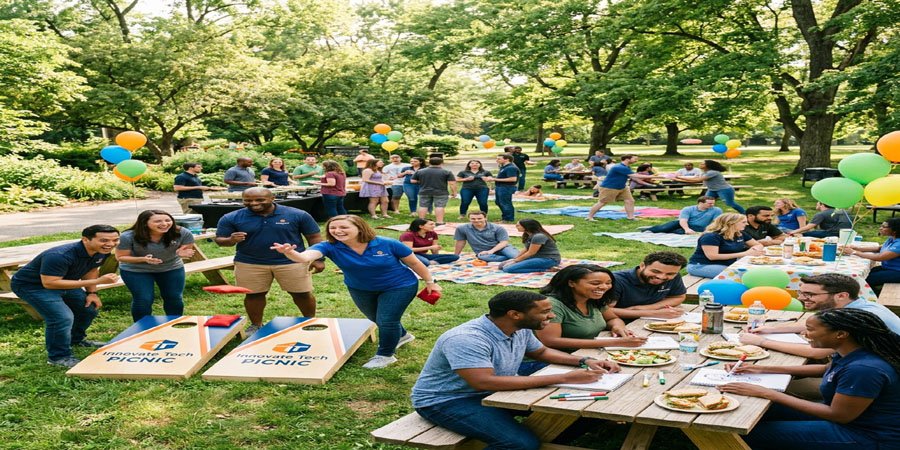
Are you in search of Company Picnic Games?
These games bring people together in a relaxed environment where workplace titles fade and genuine connections form. They invite everyone to interact outside their usual roles, building trust through laughter and teamwork. A playful setting helps spark creativity, fresh ideas, and empathy among coworkers. Thoughtfully chosen games can turn a day outdoors into a memorable boost for communication and company culture.
In this article, let’s see some effective Company Picnic Games.
Here is an overview of the sections in this article:
- Key planning points to help you run smooth, enjoyable activities.
- Ten engaging options with simple setups, clear steps, and reflection prompts.
- Frequently Asked Questions.
So, let’s get started!
What Should You Consider Before Conducting These Activities?
Before you begin, review these practical tips to make the experience safe, smooth, and enjoyable for everyone.
Match Each Activity to Your Workplace Culture
Choose options that fit your workplace personality, comfort levels, and event goals. A playful sales crew may enjoy fast contests, while a mixed department gathering may prefer light collaboration. The right fit helps people join in with ease, confidence, and genuine interest.
Keep Instructions Clear and Easy to Follow
Simple directions reduce confusion, save time, and help everyone start quickly. Use short steps, show materials before play begins, and assign one facilitator for each station. Clear guidance keeps energy high while limiting delays, repeated questions, and uneven participation during play.
Plan for Safety, Space, and Accessibility
Check the picnic area in advance so activities suit the ground, weather, and available room. Avoid setups that create crowding or tripping risks. Offer choices that welcome varied mobility levels so more employees can take part comfortably and feel included.
Set a Friendly Tone Instead of High Pressure
The goal is connection, not intense competition. Encourage laughter, participation, and shared effort over perfect performance. Light recognition works better than heavy pressure because it keeps the atmosphere open. People engage more fully when the event feels supportive, relaxed, and welcoming.
Prepare Materials Before the Event Starts
Gather supplies early so transitions stay quick throughout the event. Label items by activity, test anything reusable, and keep backup materials nearby. Good preparation lowers stress for organizers while helping participants stay focused on fun, movement, and interaction instead of waiting around.
10 Effective Company Picnic Games
Here are some effective Company Picnic Games that you can try with your coworkers.
#1. Relay Sketch Challenge
This fast drawing activity mixes communication with humor in a simple format. It works well for coworkers who enjoy creativity, quick thinking, and light physical movement.
Time: 10-20 minutes
Materials: Paper, Markers, and Timer
Participants: 3-8 people per group
Instructions
- Ask each group to line up facing a drawing surface with one marker available.
- Give the first person a prompt, such as a barbecue grill, kite, or picnic basket.
- Each participant adds one part of the sketch, then passes the marker to the next person.
- After time ends, have everyone guess the drawing meaning, then share what made the process funny.
Debrief
- What helped your group understand the drawing prompt quickly?
- How did people respond when the sketch started going in an unexpected direction?
- What did this activity show about communication under time limits?
You can also read:
50 Awesome Team Building Activities (Workplace)
#2. Picnic Trivia Toss
This option combines light competition with shared knowledge in an easy outdoor format. It suits mixed departments because it rewards listening, memory, and quick discussion.
Time: 10-20 minutes
Materials: Soft Balls, Trivia Cards, and Buckets
Participants: 3-8 people per group
Instructions
- Place buckets at different distances, with each one tied to a point value.
- Read a trivia question aloud, and give each team time to discuss the answer.
- If the answer is correct, one team member can throw the soft ball toward a bucket to earn the matching score.
- Continue for several rounds, using topics like office history, hobbies, or picnic facts.
Debrief
- Which type of question sparked the most conversation?
- How did your team decide when to play safe or take a risk?
- What made the activity feel engaging for different personalities?
#3. Human Knot Lite
This short movement challenge encourages coordination without requiring intense physical effort. It is a good fit for building trust in a playful, low-stakes way.
Time: 10-15 minutes
Materials: Timer and Open Space
Participants: 4-8 people per group
Instructions
- Ask participants to stand in a circle, then reach across to hold two different hands.
- Make sure no one grabs the hands of the people standing directly beside them.
- Invite the group to untangle itself slowly without letting go at the start.
- If needed, allow one release after a minute so the puzzle stays fun, not frustrating.
Debrief
- What kind of communication worked best during the untangling process?
- When did the challenge feel easiest or hardest?
- How did patience affect the outcome?
#4. Balloon Keep-Up Circle
This cheerful activity adds movement while staying simple enough for all ages. It creates quick bursts of laughter because small mistakes often lead to funny recoveries.
Time: 10-15 minutes
Materials: Balloons and Timer
Participants: 3-8 people per group
Instructions
- Give each group one balloon, then ask members to form a loose circle.
- Explain that the balloon must stay in the air using taps only, not catches.
- Count each successful hit aloud to build momentum during the round.
- For example, require everyone to touch the balloon once before any player gets a second turn.
Debrief
- What strategies helped your group keep the balloon moving?
- How did the rules shape participation?
- What did this reveal about coordination in a casual setting?
#5. Scavenger Sprint
This search-based game brings energy to the picnic while encouraging observation. It works especially well in parks or open venues with safe landmarks.
Time: 10-20 minutes
Materials: Item Lists, Pens, and Small Bags
Participants: 3-8 people per group
Instructions
- Hand each team a list of easy-to-find items, such as a pinecone, red leaf, or smooth stone.
- Set clear boundaries so everyone knows where searching is allowed during the sprint.
- Award points for each listed object collected within the time limit.
- For instance, give bonus credit when a team finds every item without asking for hints.
Debrief
- How did your team divide the search work?
- Which part of the challenge felt most exciting?
- What did the activity show about planning under time pressure?
#6. Cup Stack Showdown
This quick task tests coordination, focus, and rhythm with very simple supplies. It is easy to run in rounds, which keeps the pace lively throughout the event.
Time: 10-15 minutes
Materials: Plastic Cups, Table, and Timer
Participants: 3-8 people per group
Instructions
- Place a stack of cups on the table for each team.
- Have one team member at a time build the cups into a small pyramid and then return them to one stack.
- Time each participant from the moment they pick up the first cup until the cups are restacked, then add the times together.
- The team with the lowest total time wins. For a moderate challenge, use a 10-cup pyramid.
Debrief
- What improved performance after the first attempt?
- How did people respond to mistakes during the stacking round?
- Where do you see similarities between this challenge and work tasks?
#7. Pass the Story
This creative speaking game helps coworkers listen closely while thinking on their feet. It is ideal for relaxed settings where conversation matters as much as winning.
Time: 10-15 minutes
Materials: Prompt Cards and Timer
Participants: 3-8 people per group
Instructions
- Give each group a prompt card, such as lost sunglasses at the park.
- Ask one person to start a story with a single sentence tied to the prompt.
- Move clockwise so each participant adds one sentence to continue the tale.
- After the final turn, let the group retell the full story in one smooth version.
Debrief
- What made the story easy or hard to build together?
- How did listening affect the final result?
- Which additions changed the direction in the most memorable way?
#8. Water Transfer Race
This refreshing challenge is great for warm weather and active crowds. It promotes planning because success depends more on coordination than speed alone.
Time: 10-20 minutes
Materials: Cups, Buckets, Water, and Sponge
Participants: 3-8 people per group
Instructions
- Fill one bucket with water, then place an empty bucket several steps away.
- Have teams transfer water using cups or a sponge without running.
- Mark the finish time, then measure which team moved the most water successfully.
- For instance, require every player to take one turn before anyone repeats.
Debrief
- What approach helped your team lose the least water?
- How did the pace affect accuracy?
- What lessons about coordination stood out during the race?
#9. Toss and Tell
This conversation game blends light movement with personal sharing in a balanced way. It can help coworkers learn new details about one another without feeling forced.
Time: 10-15 minutes
Materials: Soft Ball and Question Cards
Participants: 3-8 people per group
Instructions
- Ask participants to stand in a circle, then place question cards in the center.
- One player tosses the ball to another person, who picks a card after catching it.
- The catcher answers the question briefly, then tosses the ball to someone new.
- For example, prompts can include favorite travel memory, hidden skill, or ideal weekend plan.
Debrief
- Which questions led to the strongest conversations?
- How did movement change the feel of the discussion?
- What new connections formed during the activity?
#10. Mini Flag Capture
This short strategy game adds excitement without needing a large field or long rules. It works best when participants enjoy movement, planning, and fast decision-making.
Time: 10-20 minutes
Materials: Cones, Two Flags, and Boundary Markers
Participants: 3-8 people per group
Instructions
- Divide the area into two zones, then place one flag at the back of each side.
- Split players into teams, with each side protecting its flag while trying to capture the other.
- Tagging sends a player back to the starting point before rejoining play.
- Keep rounds brief so energy stays high, then rotate roles after each match.
Debrief
- What strategy helped your team balance defense with attack?
- How did communication shape movement choices?
- What made the game exciting without becoming overwhelming?
Want to Develop Leaders at Every Level of Your Organization?
If you want a practical system to develop leaders at all levels, get this master guide and apply our proprietary ZIGN Framework™ of Leadership:
Looking for Unique Team Building Activities?
If you want unique activities that help your workforce grow through every stage of team development, get this guide:
Need Fresh Team Building Activities Every Month?
If you are a busy leader, get 5 unique, fully customizable activities every month—no preparation or trainer required.
Final Words
Well-chosen picnic activities can turn a routine gathering into a memorable shared experience. The best options are easy to explain, simple to set up, and welcoming for many personality types. When people laugh together, they often connect in ways that formal meetings cannot create. These ten ideas can help you build stronger relationships while keeping the event lively. With good planning, your next outdoor gathering can feel both fun and meaningful.
FAQ: Company Picnic Games
You might have these questions in mind.
How do I choose the right activity for my picnic?
Start by looking at your goals, available space, and employee comfort levels. Some groups prefer calm conversation, while others enjoy movement or friendly competition. A good mix often works best for a varied crowd. Choose activities that feel inclusive, simple, and easy to explain.
How many activities should I schedule for one picnic?
That depends on the event length and the energy you want to create. For a shorter gathering, two to four well-run activities may be enough. Longer events can support more variety without feeling rushed. Leave free time between sessions so people can relax and socialize.
What if some employees do not want to join active games?
Offer a range of choices so participation feels comfortable for different people. Conversation-based, creative, or low-movement options can balance more physical activities. People are more likely to join when pressure is low. A welcoming tone matters as much as the game design itself.
How can I make these activities more inclusive?
Use simple rules, flexible roles, and clear instructions from the start. Check whether mobility, weather, or sensory factors may affect participation. Small adjustments can make a big difference for comfort and access. Inclusion improves the experience for everyone at the event.
What is the best way to keep the event organized?
Prepare supplies ahead of time and assign one facilitator to each activity area. Clear timing helps transitions stay smooth throughout the picnic. Printed instructions can reduce confusion during busy moments. Good planning keeps attention on fun instead of logistics.
Like this article on “10 Effective Company Picnic Games”? Feel free to share your thoughts.
