
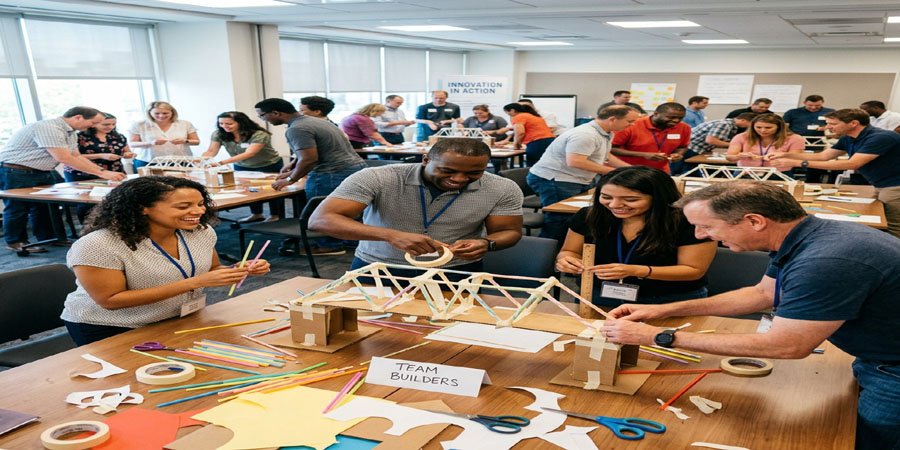
Do you want to conduct the Build a Bridge Activity with your teams?
This exercise is based on shared problem-solving, hands-on learning, and clear communication. It gives people a common goal, limited resources, and a short time frame, which often reveals how they plan, adapt, and support one another. The task also draws on experiential learning because people learn by doing, reflecting, then improving. As a result, it can strengthen trust, creative thinking, and coordination in a simple way.
In this article, let’s see how you can conduct this activity with your teams.
Here is an overview of the sections in this article:
- Objective of the Activity
- 5 Variations of the Build a Bridge Activity
- Tips for Successful Facilitation
- Frequently Asked Questions about the Exercise
So, let’s get started!
Objective of the Activity
This exercise is more than a quick craft challenge. It helps people work through a shared task while paying attention to process, roles, and practical decisions.
Let’s look at the key objectives of this activity.
Improve Communication Skills
People must explain ideas clearly during the task. They also need to listen well, ask useful questions, and check whether others understand the plan. This creates a setting where direct, simple communication matters. When materials are limited and time is short, vague language often leads to mistakes. The exercise helps participants notice that clear instructions, active listening, and quick feedback can save time.
Strengthen Collaboration
The activity encourages people to combine their efforts toward one visible outcome. No single person can easily complete the challenge alone, so participants must divide tasks, share input, and support one another. This helps them experience how cooperation affects speed and quality. It also shows that good collaboration is not just about being friendly. It is about coordinating actions in a practical way.
Encourage Creative Problem-Solving
A bridge-building challenge pushes people to think with what they have. Since supplies are often basic, participants must test ideas, adjust designs, and find smart ways to make the structure stable. This can spark fresh thinking because there is rarely one perfect answer. Some may focus on shape, while others may focus on balance or support. The exercise helps people see that creative solutions often grow from limits.
Build Planning and Decision-Making Skills
Many participants want to start building at once. Yet the activity teaches that a short planning phase can improve the final result. People must decide what design to try, how to use materials, and who will handle each step. These choices matter because poor planning can waste both time and resources. Through the exercise, participants learn that quick but thoughtful decisions often lead to better execution.
Develop Trust and Adaptability
Unexpected problems often appear during the task. A design may collapse, tape may run out, or a plan may not work as expected. In those moments, people need to stay calm, trust each other, and adjust fast. This helps them practice flexibility in a low-risk setting. It also shows that trust grows when people respond to setbacks with support, not blame.
5 Variations of the Build a Bridge Activity
Here are 5 variations of the Build a Bridge Activity for your teams.
#1. Classic Paper Bridge
This is the standard version where participants create a bridge that can span a gap and hold weight. It is simple to run, easy to explain, and useful for most workplace settings.
Time: 10-20 minutes
Materials: Paper, Tape, Scissors, and Coins
Participants: 3-8 people per group
Instructions
- Ask each team to build a bridge that spans two desks, chairs, or boxes with the provided supplies.
- Set a clear goal for strength, such as holding several coins for five seconds. For example, you can ask participants to aim for ten coins.
- Give teams a short planning period before building so they can agree on a design.
- Test each structure at the end by placing weight on the center and noting which design performs best.
Our Experience While Running This Activity: We found that teams could begin building before agreeing on how the bridge would support weight. Discussing the design and where to reinforce it before construction helped participants use their materials more deliberately.
Debrief
- What design choice had the biggest effect on your result?
- How did your group make decisions under time pressure?
- What would you change if you had one more round?
You can also read:
50 Easy Team Building Activities (Workplace)
#2. Silent Bridge Challenge
In this variation, participants complete the task without speaking during the building phase. It highlights nonverbal communication, observation, and role awareness.
Time: 10-20 minutes
Materials: Straws, Tape, Paper, and Rubber Bands
Participants: 3-8 people per group
Instructions
- Explain the goal before the challenge starts, then tell teams they cannot speak once building begins.
- Give each team one minute to assign rough roles before silence starts. For instance, one person can shape supports while another secures joints.
- Start the timer and observe how participants use gestures, eye contact, and quick demonstrations.
- End the activity with a strength test, then invite each team to reflect on what helped them coordinate.
Debrief
- What made communication hard during the silent phase?
- Which nonverbal signals worked best for your team?
- How did silence change your planning process?
#3. Limited Materials Bridge
This version adds pressure by reducing the amount of supplies each group receives. It is a strong choice when you want to focus on resource use and prioritization.
Time: 10-20 minutes
Materials: Paper, Tape, and Popsicle Sticks
Participants: 3-8 people per group
Instructions
- Give each group a very small set of materials and explain that they cannot request more.
- Ask groups to build a bridge that spans a fixed gap while using every item with care.
- Encourage participants to discuss trade-offs before construction starts. For example, they may choose between width and strength.
- Test the final structures based on both stability and smart use of supplies.
Debrief
- How did limited resources affect your decisions?
- What trade-offs did your group make during the task?
- Where do you see a similar challenge in real work?
#4. Speed Bridge Sprint
This variation focuses on pace as much as design quality. It works well when you want a high-energy session with fast decisions.
Time: 10-20 minutes
Materials: Index Cards, Tape, Straws, and Paper Clips
Participants: 3-8 people per group
Instructions
- Tell groups they must complete a working bridge before the timer ends, with very little planning time.
- Set a short build window that pushes quick action, such as ten minutes from start to finish.
- Remind groups to keep the structure functional, not just fast to assemble. For example, it should still hold a small object.
- Review each bridge once time is up, then compare how speed influenced quality.
A Small Adjustment We Made While Running This Activity: We found that teams could prioritize finishing quickly over checking whether their bridge would hold weight. Making the testing requirement clear from the beginning helped keep speed and functionality in balance.
Debrief
- How did the short timeline shape your choices?
- What helped your group stay focused during the sprint?
- When does moving fast help or hurt performance at work?
#5. Bridge for a Story Scenario
This version gives the challenge a simple story, such as building a bridge after a storm or for a delivery route. It adds context, which can increase engagement and imagination.
Time: 10-20 minutes
Materials: Cardboard, Tape, String, and Coins
Participants: 3-8 people per group
Instructions
- Introduce a short scenario that explains why the bridge matters, then define the success criteria.
- Ask groups to design a structure that fits the story needs, such as carrying supplies across a damaged path.
- Encourage participants to connect design choices to the scenario. For instance, they may add extra support for a heavier load.
- Test each bridge at the end, then discuss how the scenario changed the way people approached the task.
Debrief
- How did the story context influence your design?
- What part of the scenario made the task more meaningful?
- How can context improve problem-solving in daily work?
Want to Develop Leaders at Every Level of Your Organization?
If you want a practical system to develop leaders at all levels, get this master guide and apply our proprietary ZIGN Framework™ of Leadership:
Looking for Unique Team Building Activities?
If you want unique activities that help your workforce grow through every stage of team development, get this guide:
Need Fresh Team Building Activities Every Month?
If you are a busy leader, get 5 unique, fully customizable activities every month—no preparation or trainer required.
Tips for Successful Facilitation
A well-run session can make this exercise far more useful. Good facilitation keeps the challenge fun, clear, and focused on learning rather than confusion.
Here are five tips to help you facilitate the activity well.
Set Clear Success Criteria
Participants should know exactly what counts as success before they begin. Define the gap length, time limit, materials allowed, and testing method. If the bridge must hold weight, say how much weight and for how long. Clear rules reduce debate during the task. They also make the final comparison feel fair.
Keep Materials Simple
You do not need fancy supplies for this activity. In fact, simple materials often create better learning because they push people to think harder about structure and design. Paper, tape, straws, cards, and coins are often enough. When supplies are too complex, attention can shift away from teamwork. Keep the setup easy so the focus stays on collaboration.
Watch the Process, Not Just the Result
It is tempting to praise only the strongest bridge. Still, the real value often comes from how people work together during the challenge. Notice who invites ideas, who keeps the team organized, and how the team responds when a plan fails. These moments can lead to rich discussion later. During the debrief, bring attention to behaviors as much as outcomes.
Adjust the Difficulty for Your Audience
Not every team needs the same level of challenge. A new team may benefit from the classic version with basic rules, while an experienced team may enjoy silence, fewer supplies, or a tighter deadline. You can also change the gap length or weight target to match the group’s confidence. The goal is to create productive tension, not frustration. A good level of challenge keeps people engaged.
End With Reflection
Do not skip the debrief. Reflection helps participants connect the hands-on task to real workplace habits such as planning, listening, trust, and adaptability. Ask open questions that invite honest thought instead of yes-or-no replies. Encourage people to share what worked, what failed, and what they would do differently next time. This final step turns a short game into a learning experience.
Final Words
The Build a Bridge Activity is simple, practical, and engaging. It helps people practice communication, planning, and creative problem-solving in a short session. You can also adapt it easily for different goals, energy levels, or team needs. With clear instructions and a strong debrief, the exercise can lead to useful insights. Try one variation at your next session and see what your participants discover.
FAQ: Build a Bridge Activity
You might have these questions in mind.
How long should this activity last?
Most versions work well in 10 to 20 minutes, especially when materials are ready before the session starts. You may also want to add a few extra minutes for instructions plus debrief. If the activity includes a story scenario or stricter testing, you can use the full 20 minutes. Keep the pace brisk so participants stay engaged.
What is the ideal group size for this exercise?
A good size is 3 to 8 people per group. This range gives enough variety in ideas while still allowing everyone to take part. Smaller groups may move faster, while larger ones may need clearer roles. If your room is large, you can run several groups at the same time.
What materials work best for bridge building?
Simple supplies are usually best because they keep the challenge focused. Paper, tape, straws, index cards, cardboard, string, coins, and popsicle sticks all work well. Try to choose items that are safe, easy to handle, and quick to distribute. A small mix of flexible items and firm items often creates better design options.
Can this activity be used for remote teams?
Yes, but it needs a small adjustment. You can ask participants to use common items from home, then build on camera within the same time limit. Another option is to turn it into a design challenge where each team sketches a bridge plan instead of building a physical model. The debrief still matters because that is where the learning becomes clear.
What should I discuss in the debrief?
Focus on what participants noticed during planning, building, and testing. Ask about communication, decision-making, trust, and how people handled setbacks. You can also explore how the exercise relates to workplace tasks that involve deadlines, limited resources, or shared goals. Open-ended questions usually lead to stronger reflection.
Like this article on the “Build a Bridge Activity for Teams”? Feel free to share your thoughts.
