
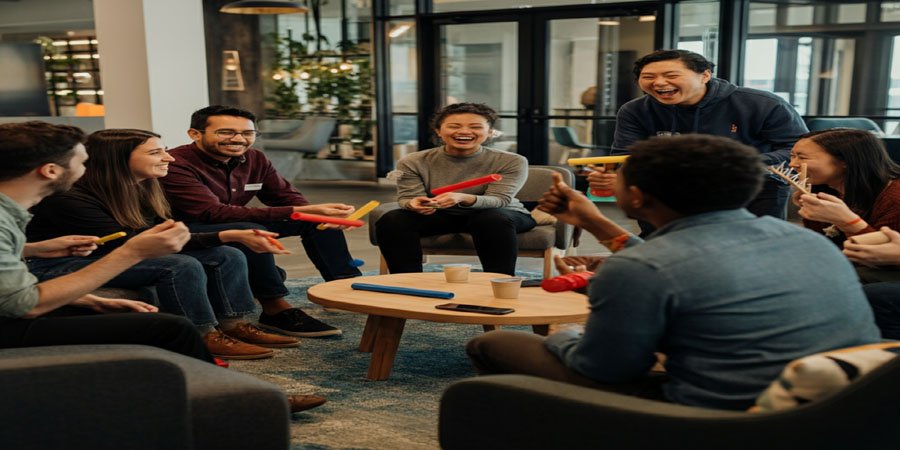
Do you want to conduct the Game of Possibilities Activity with your teams?
This activity is a powerful tool for boosting creativity and collaborative thinking. It encourages participants to look beyond the obvious, fostering innovation within a fun and engaging framework. The game challenges individuals to generate unique ideas under light pressure, strengthening their ability to think on their feet. It is an excellent icebreaker or a short break during long meetings.
In this article, let’s see how to facilitate this activity, explore different versions, and lead a meaningful discussion afterward.
Here is an overview of the sections in this article:
- The primary goals of the game of possibilities activity.
- Five distinct variations, starting with the classic version.
- Tips for facilitating a successful session.
- Frequently asked questions about the exercise.
So, let’s get started!
Objective of the Activity
The Game of Possibilities is more than just a simple icebreaker; it is a strategic exercise with clear developmental goals. It pushes participants out of their comfort zones, encouraging them to think abstractly and unconventionally about everyday objects.
Here are the key objectives of the activity:
Boost Creative Thinking
The core purpose is to stimulate creativity. Participants must quickly generate ideas that are not the object’s intended use. This rapid ideation helps break down mental blocks and encourages divergent thinking, a cornerstone of innovation. It shows team members that creative solutions can come from anywhere and that their first idea is not always the best one. This skill is directly transferable to workplace challenges that require novel approaches.
Enhance Communication Skills
Players must articulate their ideas clearly and quickly to their team. Sometimes the ideas are abstract, so explaining the new “use” of the object requires concise communication. Additionally, the non-verbal aspect of demonstrating the object’s new function improves a different facet of communication. Team members learn to express themselves effectively through both words and actions, a vital skill for any collaborative environment.
Strengthen Team Collaboration
Although individuals often present ideas, the game thrives on a collective, supportive atmosphere. Team members build on each other’s energy and creativity. The shared laughter and experience create a positive bond. This activity helps break down formal hierarchies and encourages a more open, collaborative spirit. It fosters an environment where people feel comfortable sharing unconventional thoughts without fear of judgment.
Encourage Spontaneity and Adaptability
The game operates under a time constraint, which forces participants to be spontaneous. There is little time for overthinking or self-censorship. This practice helps individuals become more adaptable and comfortable with thinking on their feet. In a dynamic work environment, the ability to react quickly and pivot is invaluable. This exercise builds mental agility, preparing teams to handle unexpected situations with more confidence.
Develop Problem-Solving Abilities
At its heart, the game is a series of rapid-fire problem-solving challenges. The “problem” is to find a new use for a common object. This process mirrors the initial stages of solving business problems: brainstorming a wide range of potential solutions before narrowing them down. It trains the brain to see possibilities instead of limitations, a mindset that is fundamental to effective problem-solving and strategic planning in any professional setting.
5 Variations of the Game of Possibilities Activity
Here are 5 variations of the Game of Possibilities that you can try with your teams.
#1. The Classic Game of Possibilities
This is the original and most straightforward version of the game. It establishes the basic rules and flow that form the foundation for all other variations.
Time: 10-20 minutes
Materials: A collection of simple, everyday objects (e.g., a pen, cup, paperclip, book, etc.)
Participants: 3-8 people per group
Instructions
- Ask each team to sit in a circle and place one object in the center.
- Instruct the first person to pick up the object and demonstrate a new use for it without speaking. The person must use the object as a prop to mime the new function.
- After the demonstration, the rest of the team guesses what the new use is. For instance, a participant might hold a stapler to their ear and pretend it is a mobile phone.
- Once the use is guessed correctly, the object is passed to the next person, who must come up with a completely different use. The game continues until time runs out or everyone has had a few turns.
Our Experience While Running This Activity: We found that participants sometimes struggled to suggest an unusual use for a familiar object because they focused on its intended purpose. Seeing another participant demonstrate an unexpected use helped open up new possibilities and encouraged more creative responses.
Debrief
- What was the most challenging part of coming up with a new idea?
- How did it feel to share your idea without using words?
- Did seeing others’ ideas inspire you to think differently? If so, why?
You can also read:
50 Easy Team Building Activities (Workplace)
#2. The Storytelling Chain
This variation adds a narrative layer to the game. It transforms the activity from simple demonstrations into a collaborative storytelling exercise.
Time: 10-20 minutes
Materials: One unique or interesting object
Participants: 3-8 people per group
Instructions
- Give one object to the first person in the group.
- Ask that person to start a story by demonstrating a use for the object. For example, holding a water bottle like a telescope, they might say, “I scanned the horizon for signs of land.”
- The person then passes the object to the next player, who must continue the story by demonstrating a new use for the same object.
- Each participant adds one or two sentences to the story, building a collective narrative around the object’s changing functions until everyone has contributed.
Debrief
- How did the story change as the object’s purpose changed?
- Was it easier or harder to think of ideas when they had to fit into a story? If so, why?
- What does this exercise show us about building on the ideas of others?
#3. The Problem-Solver
This version introduces a practical constraint. It focuses creative energy on solving a specific, fictional problem.
Time: 10-15 minutes
Materials: A bag with several random objects
Participants: 3-8 people per group
Instructions
- Present the group with a hypothetical scenario. For instance, “You are all stranded on a desert island and need to build a shelter.”
- Have one person draw an object from the bag.
- The group must brainstorm as many ways as possible to use that object to help solve the problem.
- After a few minutes of brainstorming for one object, have another person draw a new object and repeat the process.
Debrief
- Which object sparked the most useful ideas for our scenario?
- How did the specific problem focus your creativity?
- Did working as a team generate better solutions than you might have thought of alone? If so, why?
#4. The Speed Round
This variation is all about energy, speed, and spontaneity. The focus is on quantity of ideas over quality, removing the pressure to be perfect.
Time: 10-15 minutes
Materials: One simple object per group
Participants: 3-8 people per group
Instructions
- Have each group form a circle with one object.
- Explain that the goal is to pass the object around the circle as quickly as possible.
- As each person receives the object, they must shout out a new use for it before passing it on. For example, when passed a ruler, someone might yell “catapult!” then immediately pass it.
- Encourage participants not to overthink; the first idea that comes to mind is the right one. Continue for several fast-paced rounds.
Debrief
- How did the fast pace affect your ability to generate ideas?
- Did you find yourself becoming less self-conscious as the game went on? If so, why?
- What can we learn from this about brainstorming under pressure?
#5. The Silent Movie
This variation emphasizes non-verbal communication and interpretation. It requires players to be expressive actors and attentive observers.
Time: 10-20 minutes
Materials: A variety of objects with different shapes and sizes
Participants: 3-8 people per group
Instructions
- Divide the participants into two teams: Actors and Guessers.
- Give one Actor an object, hidden from the Guessers. The Actor must demonstrate a new use for the object in complete silence.
- The Guessers work together to figure out the new function. For instance, an Actor might use a binder clip as pretend lobster claws.
- Once the use is guessed, a new Actor takes a different object. The teams can switch roles after a set number of rounds.
What We Learned While Running This Activity: We found that guessers could become fixated on their first interpretation of a demonstration. Encouraging them to observe the object’s use from different angles helped them consider alternative explanations before settling on an answer.
Debrief
- For the Actors: How did you communicate your idea without words or sounds?
- For the Guessers: What clues did you look for to understand the demonstration?
- How does this activity highlight the importance of clear non-verbal cues in communication?
Want to Develop Leaders at Every Level of Your Organization?
If you want a practical system to develop leaders at all levels, get this master guide and apply our proprietary ZIGN Framework™ of Leadership:
Looking for Unique Team Building Activities?
If you want unique activities that help your workforce grow through every stage of team development, get this guide:
Need Fresh Team Building Activities Every Month?
If you are a busy leader, get 5 unique, fully customizable activities every month—no preparation or trainer required.
Tips for Successful Facilitation
Your role as a facilitator is key to making the Game of Possibilities activity a valuable experience. A well-run session can unlock significant team insights, while a poorly managed one can feel awkward or pointless.
Here are some tips to ensure the activity is successful:
Set a Positive and Playful Tone
Your energy will set the stage for the entire activity. Start with a smile and explain the game with enthusiasm. Emphasize that the goal is to have fun and be creative, not to find the “right” answers. Reassure participants that silly or absurd ideas are welcome. If you are relaxed and playful, the team will feel more comfortable letting go of their inhibitions. A lighthearted atmosphere is essential for creativity to flourish.
Choose the Right Objects
The objects you select can greatly influence the game’s success. Opt for common, everyday items that people are familiar with, as this makes it easier to imagine alternative uses. A pen, a key, a book, or a coffee mug are all great choices. Avoid items that are too complex or too abstract. Having a variety of shapes, sizes, and textures can also spark more diverse ideas. A bag of random, pre-selected items adds an element of surprise.
Manage the Time Effectively
The Game of Possibilities works best when it is fast-paced. A sense of urgency encourages spontaneity and prevents overthinking. Use a timer to keep the rounds short and the energy high, especially for variations like the Speed Round. Announce the time remaining to create a little positive pressure. However, be flexible. If a group is having a particularly great creative moment, you might extend the time slightly. The goal is energetic engagement, not rigid adherence to a schedule.
Encourage Participation from Everyone
In any group, some individuals will be more outspoken than others. Your job is to create an environment where everyone feels comfortable contributing. Gently encourage quieter members to share their ideas, perhaps by having the object passed in a specific order. Celebrate all contributions, regardless of how “good” they are. Remind the group that every idea is valid in this game. If someone is truly stuck, you can offer a simple prompt to help them get started.
Lead a Meaningful Debrief
The activity itself is fun, but the debrief is where the learning happens. This is the most critical part of your facilitation. Ask open-ended questions that connect the game to workplace dynamics. Guide the conversation toward topics like creativity, communication, and collaboration. For example, ask, “How can we apply this kind of ‘possibility thinking’ to our next project?” Listen carefully to the responses and help the team draw their own conclusions about how to transfer the experience back to their daily work.
Final Words
The Game of Possibilities is a simple yet profoundly effective team building activity. It successfully breaks down creative barriers and promotes a more innovative mindset. The game enhances communication, strengthens collaboration, and encourages quick, adaptive thinking. By exploring its variations, you can keep the exercise fresh and tailor it to different team goals. Ultimately, it teaches teams to see potential and opportunity in the everyday, a skill that is invaluable for any organization.
FAQ: The Game of Possibilities Activity
You might have these questions in mind.
What is the main benefit of this game?
The primary benefit is boosting team creativity. It trains participants to think beyond the obvious and generate novel ideas quickly. This skill directly supports innovation and creative problem-solving in a professional context.
How long should the activity last?
The activity is designed to be short and energetic. Most variations work well within a 10 to 20-minute timeframe. This makes it a perfect icebreaker for meetings or a quick mental reset during a long workshop.
Can this game be played virtually?
Yes, it adapts well to a virtual setting. Each participant can find a common object in their home office, like a coffee mug. They can then hold it up to their camera and demonstrate its new use for the rest of the team to guess.
What if participants are shy or hesitant?
It is important to create a safe and playful environment. As the facilitator, emphasize that there are no bad ideas. Starting with a simple, high-energy variation like the Speed Round can help people loosen up without feeling put on the spot.
How does this game relate to our work?
The debrief is crucial for connecting the game to work. Discuss how seeing new possibilities in an object is similar to finding innovative solutions for a project. The exercise highlights the value of diverse perspectives and building upon each other’s ideas to solve problems.
Like this article on “The Game of Possibilities Activity”? Feel free to share your thoughts.
