
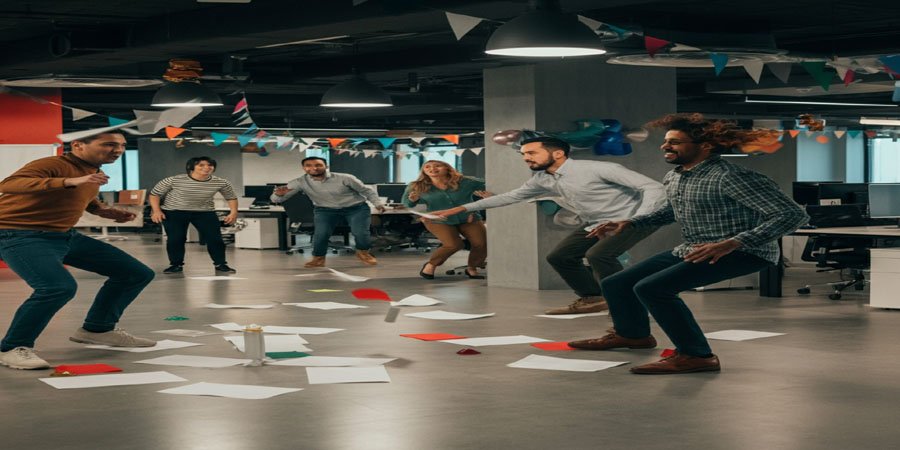
Do you want to conduct the Office Olympics Activity with your teams?
Office Olympics can boost morale and improve teamwork. This event uses friendly competition to strengthen bonds among colleagues. The activities are designed to be fun, inclusive, and beneficial for professional development.
In this article, let’s see how to organize a successful Office Olympics in your workplace. This will help you create a memorable experience for your teams.
Here is an overview of the sections in this article:
- Objective of the Office Olympics Activity
- 5 Variations of the Exercise, Including the Classic Version
- Tips for Successful Facilitation
- Frequently Asked Questions
Objective of the Activity
The primary goal of Office Olympics is to foster a positive team environment. This event goes beyond typical workplace interactions, offering a unique way to build camaraderie.
Let’s explore the key objectives that make this activity a valuable addition to any team building strategy.
Enhance Team Collaboration
This activity requires colleagues to work together toward a common goal. Participants must communicate effectively, plan strategies, and support each other. This cooperative spirit transfers back to the workplace, improving how teams handle projects.
Boost Morale and Engagement
Injecting fun into the workday is a powerful way to increase job satisfaction. A lighthearted competition breaks the routine, reducing stress and boosting overall morale. Employees who feel engaged are often more motivated and productive.
Improve Communication Skills
Many Olympic events require clear and concise communication. Teams must listen to each other’s ideas plus coordinate their actions. These activities provide a safe space to practice communication skills that are vital for daily tasks.
Foster Healthy Competition
Competition, when managed well, can be a great motivator. Office Olympics channels competitive energy in a positive direction. It encourages individuals to perform their best while promoting sportsmanship and mutual respect among coworkers.
Encourage Problem-Solving and Creativity
The challenges in this activity often require creative thinking. Teams must devise clever strategies to overcome obstacles and outperform others. This nurtures a problem-solving mindset, encouraging employees to think outside the box in their professional roles.
5 Variations of the Office Olympics Activity
Here are 5 variations of the Office Olympics activity that you can adapt for your teams.
#1. The Classic Office Olympics
This version features traditional, low-tech games using common office supplies. It is a straightforward way to introduce the concept and get everyone involved.
Time: You decide
Materials: Rubber bands, paper, wastebaskets, pencils, and paper clips
Participants: 3-8 people per group
Instructions
- Set up stations for different games like “Paper Javelin,” “Rubber Band Archery,” or “Wastebasket Ball.”
- Ask each team to rotate through the stations, with one member competing in each event.
- Award points based on performance. For instance, the farthest paper javelin throw earns the most points.
- The team with the highest total score at the end of all events wins the gold medal.
Debrief
- Which event required the most teamwork and why?
- How did your team decide who would compete in each event?
- What did you learn about your teammates’ skills during the games?
You can also read:
15 In-Person Team Building Activities for Work
Typing Race Game for Teams (With Instructions)
10 Team Building Strategy Games for the Workplace
#2. The Digital Office Olympics
This variation is perfect for remote or hybrid teams, using online games and digital tools. It leverages technology to bring colleagues together, no matter where they are located.
Time: You decide
Materials: Computers, internet connection, and online gaming platforms
Participants: 3-8 people per group
Instructions
- Choose a selection of short, web-based multiplayer games. Options could include online trivia, typing speed races, or collaborative drawing challenges.
- Divide participants into teams and send them links to the games.
- Set a time limit for each game and have teams submit their scores or screenshots of their results. For example, the team with the highest collective score in a trivia game wins that round.
- Tally the scores from all digital events to determine the overall winner.
Debrief
- What was the biggest challenge in collaborating digitally?
- How did you communicate with your team to strategize for the games?
- Did this activity change your perception of working with remote colleagues? If so, why?
#3. The Creative Office Olympics
This version focuses on imagination and artistic skills. It challenges teams to think creatively and produce something unique together.
Time: You decide
Materials: Paper, markers, building blocks, and modeling clay
Participants: 3-8 people per group
Instructions
- Present teams with a creative challenge, such as designing a company mascot or building the tallest free-standing tower.
- Provide each team with the same set of materials.
- Give teams a set amount of time to complete their creation. For instance, ask them to create a short team cheer and perform it.
- Have a panel of judges (or all participants) vote for the most creative, innovative, or impressive project.
Debrief
- How did your team brainstorm ideas for the creative challenge?
- What roles did different team members play in the creative process?
- What did you discover about your team’s creative potential?
#4. The Minute-to-Win-It Office Olympics
Based on the popular TV show, this variation consists of fast-paced, one-minute challenges. The quick succession of games keeps the energy high and excitement building.
Time: 10-20 minutes
Materials: Varies by challenge (e.g., cups, cookies, straws, cotton balls, etc.)
Participants: 3-8 people per group
Instructions
- Prepare several “Minute to Win It” style challenges that can be completed in 60 seconds.
- Ask each team to select one member to attempt each challenge.
- Explain the rules for the first challenge, then start the one-minute timer. For example, a player might have to stack a pyramid of cups using only one hand.
- Award points to teams whose members successfully complete the challenge within the time limit.
Debrief
- How did the time pressure affect your team’s performance?
- How did you support your teammate who was competing in a challenge?
- Which challenge was the most difficult, and what made it so?
#5. The Wellness Office Olympics
This version promotes well-being with a focus on light physical and mental exercises. It is a great way to encourage a healthy lifestyle in the workplace.
Time: You decide
Materials: Yoga mats, water bottles, mindfulness apps, and healthy snacks
Participants: 3-8 people per group
Instructions
- Design a series of wellness-themed events, such as a team-based step challenge, a guided meditation session, or a “healthy snack” creation contest.
- Divide participants into teams to compete in the events.
- Track progress for physical challenges throughout the day or week. For instance, the team with the most collective steps at the end of the day wins that event.
- Award points for participation and achievement in each wellness activity.
Debrief
- How did participating in these wellness activities make you feel?
- What is one wellness habit you might try to incorporate into your workday?
- How can the team support each other in maintaining a healthy work-life balance?
Want to Develop Leaders at Every Level of Your Organization?
If you want a practical system to develop leaders at all levels, get this master guide and apply our proprietary ZIGN Framework™ of Leadership:
Looking for Unique Team Building Activities?
If you want unique activities that help your workforce grow through every stage of team development, get this guide:
Need Fresh Team Building Activities Every Month?
If you are a busy leader, get 5 unique, fully customizable activities every month—no preparation or trainer required.
Tips for Successful Facilitation
Facilitating a successful Office Olympics requires careful planning and execution. The right approach ensures the event is fun, fair, and achieves its team building goals.
Here are some tips to help you lead an engaging and memorable competition.
Plan and Prepare Thoroughly
A well-organized event runs smoothly and allows everyone to focus on the fun. Before the games begin, decide on the date, time, and location. Choose the specific games you want to include, making sure they are suitable for your workspace and participants. Gather all necessary materials in advance. Create a clear schedule for the day, including time for an introduction, the games, and the debrief session. Sending out an announcement ahead of time builds anticipation.
Communicate Rules Clearly
To ensure fairness, everyone needs to understand how the games are played and scored. Explain the rules for each event before it begins. Demonstrate any complex actions if necessary. Be clear about the scoring system and how a winner will be determined. Answering all questions before starting a game prevents confusion later. Clear rules level the playing field and allow the competition to be about skill, strategy, plus luck.
Encourage Participation and Inclusivity
Office Olympics should be an event for everyone. Design activities that accommodate different physical abilities and skill sets. A mix of physical, mental, and creative challenges ensures that every team member has a chance to shine. Encourage reluctant employees to participate by emphasizing the fun, low-pressure nature of the event. Assigning roles like scorekeeper or team captain can also help involve those who prefer not to compete directly. The goal is participation, not just winning.
Maintain a Positive and Fun Atmosphere
The facilitator’s energy sets the tone for the entire event. Be enthusiastic, positive, and supportive. Play upbeat music to keep the energy levels high. Celebrate small victories and good sportsmanship, not just the final outcome. Use humor to lighten the mood and encourage laughter. Remind everyone that the main purpose is to connect with colleagues and have a good time. A positive atmosphere makes the experience more enjoyable for all.
Lead an Effective Debrief Session
The debrief is where the real team building happens. After the games conclude, gather everyone to reflect on the experience. Ask open-ended questions that encourage discussion about teamwork, communication, and what they learned. Guide the conversation to connect the lessons from the games back to the workplace. This reflection helps solidify the benefits of the activity, turning a fun event into a valuable learning opportunity.
Final Words
Office Olympics is more than just a series of fun games. It is a powerful tool for building a stronger, more connected team. The event enhances collaboration, boosts morale, and improves communication in a lighthearted setting. By carefully planning the activities and facilitating a thoughtful debrief, you can create a lasting positive impact. The shared experience and friendly competition will strengthen professional relationships. Ultimately, it fosters a more positive and productive work environment for everyone.
FAQ: Office Olympics Activity
You might have these questions in mind.
What if employees are reluctant to participate?
To encourage participation, emphasize the fun and low-pressure nature of the event. Frame it as a break from the usual routine, not a mandatory task. Offer a variety of games so people can choose activities they are comfortable with, and create non-competitive roles like judge or scorekeeper.
How can we adapt Office Olympics Activity for a remote team?
For remote teams, focus on digital games and online collaborative platforms. You can use web-based trivia, online Pictionary, or typing speed races. Use video conferencing breakout rooms to divide people into teams, allowing them to strategize and communicate during the events.
How much time should be allocated for the entire event?
A successful Office Olympics can be held in as little as an hour, or it can be a half-day event. For a shorter version, choose 3-4 quick games and allow about 15 minutes for each, including instructions. Be sure to schedule time for a brief introduction and a concluding debrief session.
What are some good prizes for the winners?
Prizes should be fun and desirable but not so extravagant that they overshadow the spirit of the event. Consider offering company-branded merchandise, gift cards for coffee or lunch, or a “trophy” for the winning team. The ultimate prize is bragging rights in the office.
Should participation be individual or team-based?
Office Olympics is most effective as a team-based activity. Dividing employees into teams encourages collaboration, communication, and strategic thinking. It shifts the focus from individual competition to collective effort, which is the core of team building.
Like this article on the “Office Olympics Activity”? Feel free to share your thoughts.
