
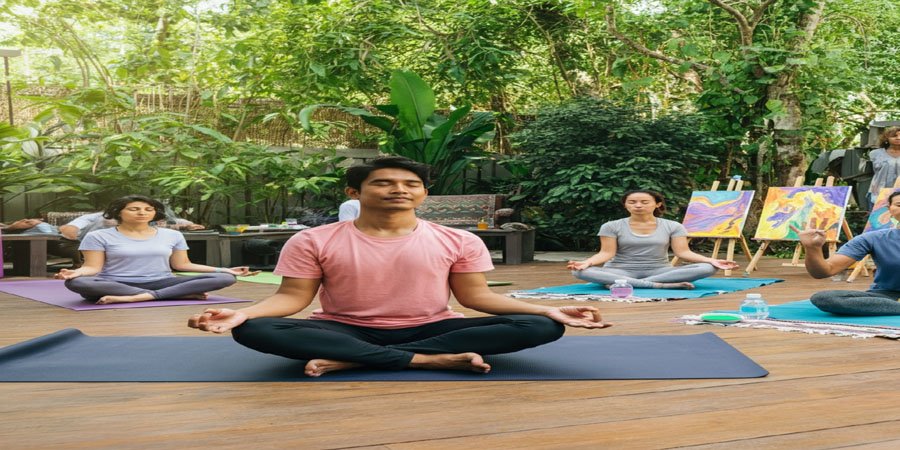
Are you in search of some relaxing team building activities?
Creating a productive and harmonious workplace starts with fostering strong connections among your employees. Group activities are an excellent way to achieve this, particularly when they are designed to relax and recharge employees while strengthening teamwork.
In this article, let’s see 10 relaxing exercises for teams that can bring your workplace closer together.
Here is an overview of the sections in this article:
- What are Relaxing Team Building Activities?
- 10 Relaxing Exercises for the Workplace
- Frequently Asked Questions
So, let’s get started!
What are Relaxing Team Building Activities?
Relaxing activities allow team members to bond in a low-pressure environment, reducing stress and improving workplace morale. These exercises are designed to promote collaboration, creativity, and well-being while providing everyone with a much-needed break. By fostering mindfulness and overall wellness, they create a healthier work environment, leading to improved productivity.
Some of the benefits of conducting these exercises are:
Promotes Better Communication
Relaxed settings encourage open and honest communication. This makes it easier for colleagues to express ideas, share feedback, and build trust.
Boosts Employee Morale
Taking time away from work to unwind with team members helps reduce stress. This improves overall mood, leading to happier employees.
Enhances Team Collaboration
Engaging in shared activities fosters a sense of unity. Team members understand each other’s strengths, improving their ability to work together effectively.
Sparks Creativity
Stepping away from regular routines inspires fresh perspectives. Fun tasks can lead to innovative thinking among team members.
Reduces Workplace Stress
Relaxing activities provide employees with a chance to recharge. This lowers stress levels, promoting better mental health at work.
Encourages Inclusivity
Team bonding in informal settings ensures every individual feels valued. It strengthens relationships across diverse groups.
10 Relaxing Team Building Activities for the Workplace
Here are some team building activities that can promote relaxation and foster a positive work culture. So, let’s go!
#1. Mindfulness Session
This activity encourages focus and relaxation through a guided visualization session. It creates a calm environment, enhancing group mindfulness.
Time: 10-15 minutes
Materials: Quiet room or virtual meeting platform
Participants: 3-8 people per group
Instructions
- Ask each participant to find a comfortable position, either seated or lying down.
- Lead the teams through a simple deep-breathing exercise, inhaling for four counts, holding for four counts, and exhaling for six counts.
- Guide participants through a visualization, such as imagining a serene landscape or a relaxing scene.
- Conclude with a moment of silent reflection where individuals can stretch or share how they feel.
Debrief
Discuss how the mindfulness session helped participants feel more relaxed or focused. Identify how this type of activity can improve attention and reduce stress in a team context.
You can also read:
10 Stress Management Activities for Groups of Adults
10 Wellness Team Building Activities for Employees
#2. Outdoor Nature Walk
This exercise involves exploring nature to refresh the mind and foster team bonding in a tranquil atmosphere. Teams will walk a short, designated path while observing their surroundings.
Time: 10-20 minutes
Materials: None
Participants: 3-8 people per group
Instructions
- Explain the path and purpose of the walk to participants before starting.
- Ask each team to notice details such as the colors of plants, sounds of birds, or textures of natural elements.
- Encourage quiet reflection during the walk to enhance mindfulness.
- Conclude by gathering teams to share their observations or favorite moments.
Debrief
Discuss how focusing on nature impacted participants’ mood or energy levels. Consider how this activity could shift perspectives or inspire creative problem-solving.
#3. Creative Story
This activity involves engaging participants in a creative storytelling exercise inspired by shared objects. Teams will generate ideas that reflect teamwork and imagination.
Time: 10-20 minutes
Materials: Everyday objects such as a pen, scarf, or key
Participants: 3-8 people per group
Instructions
- Begin by distributing one object to each group and explain they will create a short, imaginative story revolving around it.
- Ask them to discuss the object’s potential “backstory” or purpose and brainstorm creative scenarios together.
- Give each group some time to outline their story and prepare to present.
- Have them share their creations aloud, highlighting the unique perspectives behind each story.
Debrief
Discuss how collaboration influenced the stories and what new ideas emerged during the activity. Reflect on how exploring creativity enhances problem-solving and communication skills.
#4. Art Work
This exercise encourages participants to collaboratively create art while exploring different perspectives. It fosters creativity and teamwork in a fun, interactive setting.
Time: 10-20 minutes
Materials: Art supplies such as paper, pens, markers, or paint
Participants: 3-8 people per group
Instructions
- Provide each group with identical sets of art supplies and give them 5-10 minutes to create a piece of art that represents a specific theme, such as “journey” or “connection.”
- Ask them to explain the thought process behind their artwork and identify key elements they included.
- Encourage participants to discuss how they collaborated on their designs and share what challenges they faced during the process.
- Compare the artworks between groups and highlight the unique approaches or themes featured in each creation.
Debrief
Discuss how teamwork and diverse perspectives influenced the final creations. Reflect on how the activity showcased creative problem-solving and effective communication.
#5. “Highs and Lows” Sharing
This activity encourages participants to share personal experiences by reflecting on their recent “highs” and “lows,” promoting connection within the group. It fosters open communication and empathy in a structured, time-efficient manner.
Time: 10-15 minutes
Materials: None
Participants: 3-8 people per group
Instructions
- Ask each participant to think about one “high” and one “low” from their recent week.
- Have them share their highs and lows with their group briefly.
- Encourage participants to ask follow-up questions to gain a deeper understanding.
- Suggest that each group conclude by identifying any shared experiences or takeaways.
Debrief
Discuss how participants felt about sharing both positive and challenging moments. Reflect on how the activity enhanced mutual understanding and encouraged meaningful dialogue.
#6. Desk Yoga
This activity focuses on guided desk yoga or simple stretching exercises to promote relaxation and improve focus during the day. Participants will follow basic, seated stretches to ease tension and boost energy.
Time: 5-10 minutes
Materials: Chairs and optional timer
Participants: 3-8 people per group
Instructions
- Ask each team member to sit comfortably in their chair with their feet flat on the ground.
- Guide them through stretches like neck rolls, shoulder shrugs, and seated forward bends.
- Encourage them to take slow, deep breaths throughout the activity.
- Demonstrate options for modifying stretches, such as using less range of motion for comfort.
Debrief
Discuss how the stretching exercises affected participants’ mood and energy levels. Reflect on how the activity encouraged awareness of physical tension and mindful breathing.
#7. Puzzle Challenge
This exercise promotes teamwork and problem-solving skills through collaborative tasks. Participants work together to complete a given puzzle challenge efficiently.
Time: 10-20 minutes
Materials: Puzzle sets or logic challenge cards
Participants: 3-8 people per group
Instructions
- Provide each team with a puzzle or logic problem relevant to their group size and skill level.
- Ask participants to analyze the challenge together and propose strategies for solving it step-by-step.
- Encourage teams to assign roles such as researcher, recorder, or presenter to enhance efficiency.
- Set a time limit and have each team present their solution or approach at the end.
Debrief
Discuss how teams split tasks, communicated, and overcame obstacles while solving the challenge. Reflect on how these strategies could be applied to real-world situations requiring collaboration.
#8. Group Gardening
Group gardening encourages teamwork and mindfulness as participants work together on simple planting tasks. It fosters connection and a shared goal while providing a brief, engaging experience.
Time: You decide
Materials: Small pots or garden beds, seeds or seedlings, soil, and gloves
Participants: 3-8 people per group
Instructions
- Provide each team with the materials needed for planting and ensure the space is prepared.
- Ask them to collaborate on planting one pot or section, taking turns to add soil, seeds, or water.
- Encourage participants to share ideas about plant placement or care during the task.
- Provide brief guidance during the activity to ensure all steps are completed.
Debrief
Discuss what participants noticed about team dynamics and their feelings during the activity. Reflect on how shared tasks may enhance connection and productivity in group settings.
#9. Power Pose
This exercise focuses on building confidence by adopting strong body language through power poses. Participants will explore how posture influences mood and self-perception.
Time: 5-10 minutes
Materials: None
Participants: 3-8 people per group
Instructions
- Ask team members to stand in an open space.
- Demonstrate examples of power poses, such as standing tall with arms raised or hands on hips.
- Encourage each team member to hold a power pose for 1-2 minutes and reflect silently on how they feel.
- Rotate through poses, offering participants the chance to try different stances.
Debrief
Discuss how participants felt during the power poses and how their posture impacted their sense of confidence. Reflect on whether adopting these poses could be applied in challenging situations.
#10. Casual Coffee Social
This activity focuses on strengthening social bonds through informal conversation in a relaxed setting. It promotes interaction while offering a break from structured tasks.
Time: 10-20 minutes
Materials: Coffee, tea, or other beverages, and optional snacks
Participants: 3-8 people per group
Instructions
- Arrange a comfortable seating area with beverages available for participants.
- Encourage each group to share updates, stories, or discuss lighthearted topics.
- Suggest conversation starters if needed, such as “What’s a hobby you’ve picked up recently?”.
- Conclude the session by thanking everyone and highlighting the importance of casual connections.
Debrief
Reflect on how the group dynamic shifted during the activity and whether participants felt more connected afterward. Discuss how informal interactions could enhance collaboration in professional environments.
Want to Develop Leaders at Every Level of Your Organization?
If you want a practical system to develop leaders at all levels, get this master guide and apply our proprietary ZIGN Framework™ of Leadership:
Looking for Unique Team Building Activities?
If you want unique activities that help your workforce grow through every stage of team development, get this guide:
Need Fresh Team Building Activities Every Month?
If you are a busy leader, get 5 unique, fully customizable activities every month—no preparation or trainer required.
Final Words
Relaxing team building games are a great way to strengthen workplace bonds without adding stress. By incorporating some of these ideas, you can cultivate a positive environment where employees feel supported, connected, and recharged. Prioritize relaxation and watch your team thrive! Make it a habit to regularly schedule these activities. Then, see the positive impact on employee morale, communication, and productivity. Remember, taking care of your team’s well-being is just as important as achieving business goals.
FAQ: Relaxing Team Building Activities
You might have these questions in mind.
How often should relaxing activities be conducted?
Consistency is key, so aim for monthly or bi-weekly sessions, depending on your team’s needs. Regular engagement keeps morale high and team dynamics strong. Adjust the frequency based on workload and feedback from the team.
Do these activities have to be held in person?
Not at all! Many relaxing activities can be adapted for remote teams. You can use video conferencing tools to facilitate such sessions, like online meditation exercises, or even virtual coffee breaks. This way, you can include remote team members and make everyone feel connected.
How long does a relaxing game usually last?
The duration can vary greatly depending on the game, but typically ranges from 5 minutes to several hours. It is important to plan ahead and communicate the expected length of the session with your team members so they can schedule accordingly. Some activities may require more time, especially if they involve physical challenges or multiple rounds of gameplay.
How can I ensure everyone participates?
Choose activities that are inclusive and cater to different personality types, from extroverts to introverts. Encourage voluntary participation and create a safe, judgment-free environment. Personalizing activities based on team preferences increases engagement.
Should I hire a facilitator to conduct these exercises?
Not necessarily. Hiring a facilitator can be beneficial, especially for larger teams or complex exercises. A skilled facilitator ensures smooth execution, keeps the team engaged, and tailors the experience to meet your objectives. They can also help manage group dynamics and make sure everyone feels included. However, for smaller teams or informal activities, a team leader or enthusiastic volunteer can often take on the role effectively.
Like this article on “10 Relaxing Team Building Activities for the Workplace”? Feel free to share your thoughts.
