
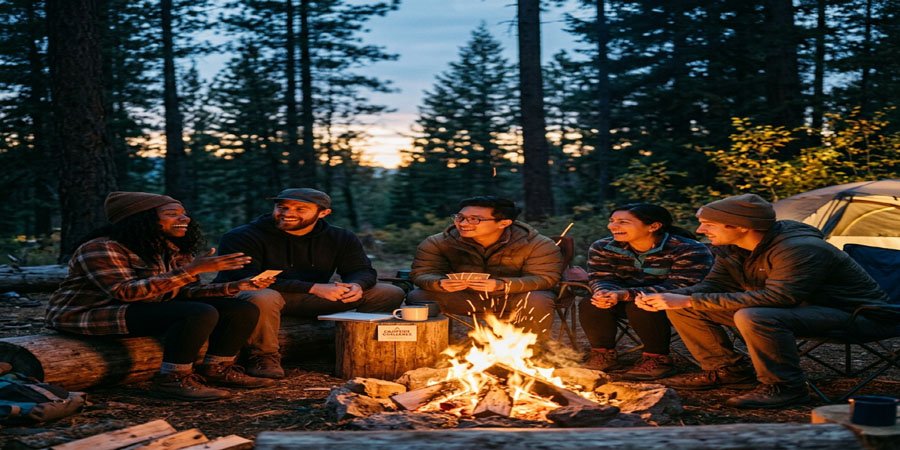
Are you in search of Campfire Games?
Gathering around a fire naturally encourages people to open up and share in a relaxed setting. These shared moments lower barriers and support honest conversation. Simple group activities in this environment can boost trust and energize any gathering. By participating together, people strengthen connections and create lasting memories.
In this article, let’s see some Campfire Games for your teams.
Here is an overview of the sections in this article:
- Key planning tips that help you run safe, smooth, engaging activities around the fire.
- Ten easy-to-use activity ideas with setup details, step-by-step instructions, and debrief prompts.
- Frequently Asked Questions.
So, let’s get started!
What Should You Consider Before Conducting These Activities?
Before you begin, review these practical tips to make each session fun, safe, and worthwhile.
Put Safety First Around the Fire
Check the fire area, seating distance, lighting, and ground surface before anyone starts. Make sure everyone knows the boundaries, basic fire rules, and emergency plan. Keep water nearby, remove trip hazards, and choose activities that will not cause rushing near flames.
Match the Activity to the Group
Consider age, energy level, familiarity, and comfort with speaking in front of others. Some people enjoy fast challenges, while others prefer quiet storytelling. Pick options that fit your participants well so everyone can join in without feeling excluded, confused, pressured, or uneasy.
Keep Instructions Short and Clear
A simple explanation helps people focus on the experience instead of the rules. Use direct language, model one sample round, and confirm understanding before starting. Clear directions save time, reduce mistakes, and make the activity feel welcoming for participants with different confidence levels.
Prepare Materials Before Everyone Arrives
Gather every item in advance so the flow stays smooth once the session begins. Count supplies, test any tools, and place materials within easy reach. Good preparation avoids awkward pauses, keeps attention high, and helps facilitators stay present during the activity itself.
Plan for Reflection After Each Activity
A short debrief turns a fun moment into a meaningful learning experience. Ask open questions about communication, creativity, inclusion, or decision-making. Reflection helps participants connect the activity to real behavior, making the time around the fire more memorable, useful, and intentional.
10 Campfire Games for Teams
Here are some Campfire Games you can try with your teams.
#1. Story Circle Spark
This activity builds listening and creativity by having participants create one shared story around the fire. Each person adds a new sentence, which keeps everyone alert while the plot grows in funny or surprising ways.
Time: 10-20 minutes
Materials: Story Prompt Cards
Participants: 3-8 people per group
Instructions
- Ask everyone to sit in a circle and explain that one person will begin a story with a single sentence.
- Move clockwise so each participant adds one sentence that connects to what came before.
- Introduce a prompt card halfway through to shift the plot, For example, “A strange sound came from the woods.”
- End after two full rounds and invite the circle to give the story a title.
A Small Adjustment We Made While Conducting This Activity: We introduced the story prompt halfway through rather than giving everyone the full direction at the beginning. The new prompt changed the direction of the story, and participants had to adapt their next sentences to fit it.
Debrief
- What helped the story feel connected from one person to the next?
- How did you decide whether to support a funny idea or change the direction?
- What did this activity show about listening under light pressure?
You can also read:
50 Awesome Team Building Activities (Workplace)
#2. Ember Memory Chain
This quick challenge strengthens focus by asking players to remember a growing list of words linked to outdoor life. It works well early in a gathering because it creates laughter while gently warming up attention and recall.
Time: 10-20 minutes
Materials: None
Participants: 3-8 people per group
Instructions
- Start with one person saying a word tied to camp, such as “Lantern.”
- The next person repeats that word and adds a new one to the chain.
- Continue around the group as the list grows longer, For instance, “Lantern, Blanket, Marshmallow.”
- If someone forgets an item, let the round restart with a fresh theme and keep the mood light.
Debrief
- Which strategies helped you remember the sequence best?
- How did the shared challenge affect the energy around the fire?
- What does this game reveal about attention during group tasks?
#3. Shadow Charades
This activity mixes movement and imagination by using firelight or flashlight glow to create simple charades. It invites playful expression without needing much setup, making it ideal for mixed personalities and short attention spans.
Time: 10-20 minutes
Materials: Flashlight and Prompt Slips
Participants: 3-8 people per group
Instructions
- Give one player a prompt slip with an object, animal, or action to act out using shadows.
- Dim extra light if possible so the shape is easier for the team to see.
- Allow one minute for guessing, For example, a flapping shadow might represent an owl.
- Rotate turns until each person has acted at least once.
Debrief
- What made some shadow clues easier to read than others?
- How did nonverbal expression change the way you communicated?
- Where else could silent problem-solving help your team?
#4. Pass the Flame Tale
This storytelling exercise uses a symbolic object to guide turn-taking and respectful speaking. It creates a calm pace, which helps quieter participants contribute while the whole circle builds one themed narrative together.
Time: 10-20 minutes
Materials: LED Candle
Participants: 3-8 people per group
Instructions
- Hand the LED candle to one participant and explain that only the holder may speak.
- Begin with a theme such as adventure, mystery, or friendship in the wild.
- After one or two sentences, the speaker passes the candle to another person to continue.
- Close the round once the tale reaches a clear ending, For instance, when the lost hikers find their path home.
Debrief
- How did the speaking object affect the pace of conversation?
- What did you notice about turn-taking during the story?
- How might this method improve balance in real discussions?
#5. Campfire Sound Match
This lively guessing activity asks participants to identify sounds created by others using common camp items or voices. It sharpens observation skills while giving everyone a fun reason to notice small details in their surroundings.
Time: 10-20 minutes
Materials: Metal Cup, Sticks, Paper Bag, and Small Pebbles
Participants: 3-8 people per group
Instructions
- Place simple materials behind one seated group member so others cannot see the sound being made.
- One person creates a sound effect using an item, such as tapping pebbles inside the cup.
- The rest of the group writes or says their best guess after each sound.
- Give every participant one turn to create a sound before counting the most correct guesses.
Our Experience While Conducting This Activity: When we used different objects to create sounds, some were identified quickly while others produced several guesses. The quieter sounds were particularly difficult to recognize when participants relied on their first impressions.
Debrief
- Which sounds were surprisingly hard to identify?
- How did careful listening affect your success in the activity?
- What can this game teach about paying attention to subtle cues?
#6. Moonlight Category Race
This fast-paced word game boosts quick thinking as players name items from a chosen category without repeating answers. The pressure stays light, yet the pace encourages focus, confidence, and spontaneous idea generation around the fire.
Time: 10-20 minutes
Materials: Category Cards and Timer
Participants: 3-8 people per group
Instructions
- Draw a category card with topics like animals, travel items, or foods cooked outdoors.
- Set the timer for one minute and have the team answer in rapid order around the circle.
- Anyone who repeats an answer or pauses too long steps out until the next round.
- Use fresh categories each round, For example, “Things you pack for rain” can create varied responses.
Debrief
- What helped you think quickly when the pace increased?
- How did the time limit shape the way people responded?
- What similarities do you see between this game and real collaboration?
#7. Marshmallow Stack Sprint
This hands-on challenge encourages planning and cooperation through a quick building task with simple supplies. Participants must create the tallest free-standing structure they can, which often reveals different styles of problem-solving and leadership.
Time: 10-20 minutes
Materials: Marshmallows, Wooden Skewers, and Napkins
Participants: 3-8 people per group
Instructions
- Give each team an equal number of marshmallows and skewers before the timer begins.
- Explain that the goal is to build the tallest structure that can stand on its own.
- Remind teams to test stability during the process, For instance, wide bases often support taller designs.
- Measure each final build at the end and celebrate creative approaches, not only height.
Debrief
- How did your planning change once building actually started?
- What role did experimentation play in the final result?
- How did people respond when ideas competed with each other?
#8. Firelight Compliment Toss
This feel-good activity helps participants notice strengths in others through short, sincere compliments. It works especially well near the end of an event because it leaves the circle with warmth, appreciation, and stronger personal connection.
Time: 10-20 minutes
Materials: Soft Ball
Participants: 3-8 people per group
Instructions
- Ask participants to stand or sit in a circle with one soft ball in play.
- The first person tosses the ball to someone else while offering a genuine compliment.
- Encourage specific comments, For example, “You stayed calm during the challenge and helped others focus.”
- Continue until everyone has received the ball at least once and heard something positive.
Debrief
- How did specific praise feel different from general praise?
- What did you learn about others during this activity?
- How could this habit strengthen daily interactions?
#9. Wilderness Two Truths and a Tale
This variation on a classic icebreaker invites players to share two true outdoor experiences and one made-up one. It sparks laughter and curiosity while helping people learn surprising details about each other in a relaxed setting.
Time: 10-20 minutes
Materials: None
Participants: 3-8 people per group
Instructions
- Give each participant a minute to think of two true camp-related statements and one false statement.
- One person shares all three statements aloud while the team listens closely.
- Invite the team to discuss which statement seems invented, For instance, “I once slept through a thunderstorm.”
- Reveal the answer after guesses, then rotate until everyone has taken a turn.
Debrief
- Which clues made a statement sound believable or doubtful?
- How did storytelling style influence your guesses?
- What did you discover about how people present themselves?
#10. Star Signal Challenge
This closing activity promotes silent coordination by asking participants to arrange themselves according to hidden criteria. Because speaking is not allowed, players rely on gestures, eye contact, and quick interpretation to succeed together.
Time: 10-20 minutes
Materials: Instruction Cards
Participants: 3-8 people per group
Instructions
- Give one card per group with a silent task such as lining up by birthday month or shoe size.
- Explain that no one may speak once the round begins.
- Allow participants to use gestures and pointing, For example, miming cold weather can suggest a winter birthday.
- End the round when everyone is in position, then check accuracy together.
What We Learned While Conducting This Activity: When participants had to arrange themselves without speaking, they relied on gestures and eye contact to communicate their positions. Some gestures were interpreted differently, so people had to repeat or adjust their signals before reaching the correct order.
Debrief
- What nonverbal signals worked best during the challenge?
- When did confusion appear, and how was it resolved?
- How might silent coordination matter in real situations?
Want to Develop Leaders at Every Level of Your Organization?
If you want a practical system to develop leaders at all levels, get this master guide and apply our proprietary ZIGN Framework™ of Leadership:
Looking for Unique Team Building Activities?
If you want unique activities that help your workforce grow through every stage of team development, get this guide:
Need Fresh Team Building Activities Every Month?
If you are a busy leader, get 5 unique, fully customizable activities every month—no preparation or trainer required.
Final Words
Campfire activities can turn a simple gathering into a memorable shared experience. With the right setup, they support connection, creativity, and trust without needing complex materials. The exercises above are easy to run, flexible, and suited to short time blocks. You can use them for retreats, youth events, workplace outings, or casual social nights. Choose a few that match your people well, then enjoy the energy they bring to the circle.
FAQ: Campfire Games
You might have these questions in mind.
Are these activities good for work retreats?
Yes, these activities can work very well for work retreats when chosen with care. They encourage communication, trust, and shared laughter in a relaxed setting. Short formats also make them easy to place between meals or discussions. Pick options that match the group’s comfort level and event goals.
How do I keep everyone included?
Start by choosing activities with simple rules and flexible participation styles. Invite people in without forcing anyone into a role that feels uncomfortable. Balance speaking tasks with movement or listening tasks so different strengths can shine. A supportive tone from the facilitator also helps everyone feel safe joining.
What if we have limited materials?
Many of these activities need little or nothing beyond common camp supplies. You can also swap items based on what you already have nearby. A flashlight, paper slips, or natural objects often work well for simple play. Clear instructions matter more than elaborate materials in most cases.
Can these be used with mixed age ranges?
Yes, they can be adapted for mixed age ranges with small changes to pace and complexity. Choose themes that feel accessible to everyone in the circle. Keep competition light so younger participants stay engaged without pressure. Adults can also support rounds by modeling clear, encouraging participation.
When should I schedule these during an event?
These activities fit well at several points during a gathering depending on your goal. Use lighter icebreakers near the beginning to warm people up. Save reflective or appreciation-based options for later when trust has grown. A balanced sequence can help the event feel more connected overall.
Like this article on “10 Campfire Games for Teams”? Feel free to share your thoughts.
