
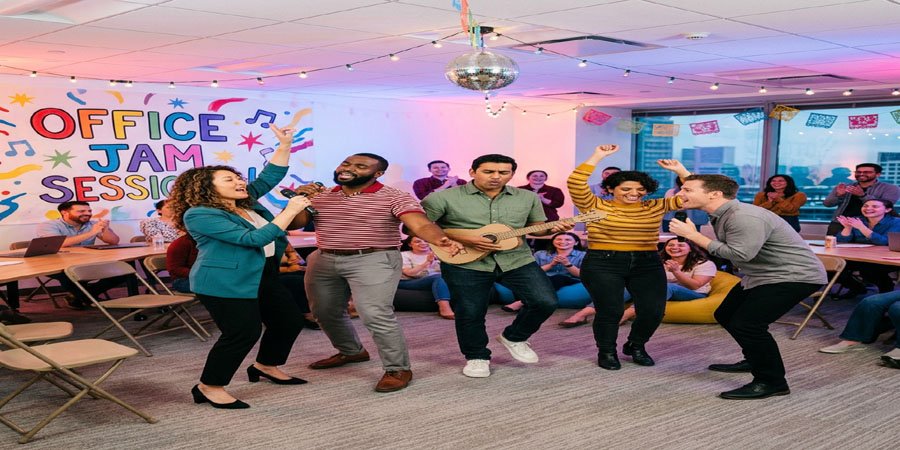
Do you want to conduct the Lip Sync Battle with your teams?
At its core, this exercise draws on social learning, play theory, and group expression. People observe one another, try new behaviors, then adjust based on audience response. The low-risk performance setting reduces pressure while still asking participants to communicate through timing, movement, and presence. Shared humor also builds psychological safety because coworkers see each other in a more human light.
In this article, let’s see how you can conduct this activity with your teams.
Here is an overview of the sections in this article:
- Objective of the Activity
- 5 Variations of the Lip Sync Battle
- Tips for Successful Facilitation
- Frequently Asked Questions about the Exercise
So, let’s get started!
Objective of the Activity
This exercise helps coworkers loosen up, connect faster, and practice creative collaboration. It turns music, movement, and playful performance into a short workplace bonding experience.
Here are the key objectives you can focus on while running it.
Building Comfort Through Play
Play is a powerful way to help people step outside their usual work roles. The Lip Sync Battle lets participants be silly, bold, or dramatic without worrying about singing talent. This shared freedom brings down social walls. Laughter and playful energy help coworkers open up. That comfort during the activity often carries into later conversations, team meetings, and workplace problem-solving.
Strengthening Nonverbal Communication
A strong performance in this activity relies on timing, gestures, facial expressions, and being alert to the group’s energy. Teams need to adjust to the rhythm of the song while responding to each other’s nonverbal cues. Practicing these skills in a playful way helps everyone improve their awareness, which leads to better presentations, clearer communication, and stronger connections back at work.
Encouraging Creative Risk-Taking
Workplaces thrive on creative thinking, but employees sometimes hold back ideas out of fear. The Lip Sync Battle creates a playful, low-pressure space for safe experimentation with new concepts or roles. Participants try out creative moves, invent routines, or take small performance risks. When coworkers learn to experiment together, they often become more confident in suggesting fresh ideas during real projects or daily tasks.
Improving Group Energy
A quick performance challenge changes the mood of a meeting or training session right away. Music injects fresh energy, and movement gets people active instead of just listening. The shared task means everyone is involved and invested. This exercise breaks routine, creates positive energy, and lifts attention. Teams often feel more awake, engaged, and ready for whatever comes next.
Revealing Leadership and Team Roles
As participants prepare, certain people take on leadership by suggesting songs or guiding routines, while others naturally encourage quieter members or help organize the group. These small moments highlight different styles of leading, supporting, adapting, or collaborating under pressure. Facilitators can spot these patterns and later discuss what each person brought to the exercise, sparking reflection on real workplace collaboration in a low-pressure way.
5 Variations of the Lip Sync Battle
Here are 5 variations of the Lip Sync Battle for your teams.
#1. Classic Lip Sync Battle
This version keeps the format simple, fast, and easy for any workplace setting. Each team selects a song clip, prepares a short routine, then performs for the room.
Time: 10-20 minutes
Materials: Music Player, Song Clips, Timer, and Speaker
Participants: 3-8 people per group
Instructions
- Divide everyone into teams. Assign one song clip to each team for their performance.
- Give teams 5 minutes to plan as a group. Decide on roles, gestures, movements, entrances, and a clear finish.
- Have each team perform their routine for 60 to 90 seconds. For example, the lead can lip sync while others support with dance or props.
- After each performance, prompt the audience to cheer. Then, let teams vote together for fun categories such as “Best Energy.”
Our Experience While Running This Activity: We found that people initially focused on their own performance ideas rather than deciding how the whole team would work together. Giving the group a few minutes to agree on roles and a simple routine made the performance much smoother.
Debrief
- What helped your team decide on a performance style quickly?
- How did you support people who felt nervous at first?
- What did this reveal about collaboration under short time limits?
You can also read:
50 Awesome Team Building Activities (Workplace)
#2. Mystery Song Relay
This version adds surprise because participants do not know the track until the activity starts. Teams must react quickly, assign roles, and create a routine with almost no planning time.
Time: 10-20 minutes
Materials: Music Player, Mystery Song List, Timer, and Speaker
Participants: 3-8 people per group
Instructions
- Place teams in performance order, then keep all song choices hidden until each turn begins.
- Play 20 seconds of the assigned track so teams can hear the mood, rhythm, and chorus.
- Give teams 3 minutes to create a quick routine, For instance, they can split into lead singer, hype crew, and dramatic actors.
- Have teams perform for 60 seconds, then invite quick applause before the next team begins.
Debrief
- How did your team respond when the song was unexpected?
- What choices helped you move from confusion to action?
- Where do you see similar quick-response moments at work?
#3. Office Props Performance
This variation uses simple workplace items to make the performance more visual. Teams turn everyday objects into microphones, costumes, instruments, or story pieces.
Time: 10-20 minutes
Materials: Sticky Notes, Pens, Notebooks, Mugs, and Scarves
Participants: 3-8 people per group
Instructions
- Give each team a small set of safe props, then assign one short song clip.
- Ask teams to use at least three props during the routine, For example, a notebook can become a guitar.
- Allow 5 minutes for teams to build a simple story, choose roles, and practice transitions.
- Invite teams to perform for 90 seconds while the audience watches for creative prop use.
Debrief
- Which prop choice made your routine more memorable?
- How did your team turn limited resources into creative ideas?
- What can this teach us about solving problems with what we have?
#4. Genre Switch Challenge
This variation asks teams to perform a song in a completely different style. A pop song might become a country ballad, a rock anthem, or a dramatic opera scene.
Time: 10-20 minutes
Materials: Song Cards, Genre Cards, Timer, and Speaker
Participants: 3-8 people per group
Instructions
- Give each team one song card, then let them draw one genre card at random.
- Ask teams to change their movement, facial expressions, and stage presence to match the new genre.
- Give teams 5 minutes to prepare, For example, a dance track can become a slow theater scene.
- Invite teams to perform for 60 to 90 seconds while the audience guesses the assigned genre.
Debrief
- What was challenging about changing the style of the song?
- How did your team agree on the tone of the performance?
- How can changing perspective help during workplace projects?
#5. Silent Coach Showdown
This version adds a communication twist by using one silent coach per team. The coach can guide the routine only through gestures, facial cues, and movement.
Time: 10-20 minutes
Materials: Music Player, Song Clips, Timer, and Speaker
Participants: 3-8 people per group
Instructions
- Select one silent coach for each team before the song clip begins.
- Give teams 4 minutes to plan a routine while the coach uses no spoken words.
- Let the silent coach guide timing during practice, For instance, raised hands can signal the chorus.
- Have teams perform for 60 seconds, then ask the coach to stay silent until the debrief.
What We Learned While Running This Activity: We noticed that some gestures were easy to misunderstand when the coach could not speak. The exercise showed us how important it is to make nonverbal signals clear when verbal communication is limited.
Debrief
- What nonverbal signals were easiest to understand?
- How did your team adapt when verbal guidance was limited?
- What does this show about communication beyond words?
Want to Develop Leaders at Every Level of Your Organization?
If you want a practical system to develop leaders at all levels, get this master guide and apply our proprietary ZIGN Framework™ of Leadership:
Looking for Unique Team Building Activities?
If you want unique activities that help your workforce grow through every stage of team development, get this guide:
Need Fresh Team Building Activities Every Month?
If you are a busy leader, get 5 unique, fully customizable activities every month—no preparation or trainer required.
Tips for Successful Facilitation
A great session does not depend on perfect performers. It depends on clear setup, warm guidance, and a room where people feel safe to join in.
Use the tips below to keep the exercise fun, respectful, and useful for workplace learning.
Create a Safe and Inclusive Environment
Set the tone before anyone performs. Explain that the goal is participation, not talent. Let people choose roles that fit their comfort level, such as performer, prop manager, timekeeper, or audience hype lead. Avoid forcing shy employees into center stage. A safe structure helps more people take part. When participants know they will not be mocked, they can relax into the experience with more confidence.
Keep Song Choices Workplace-Friendly
Pick songs that feel upbeat, familiar, and appropriate for your workplace. Short clips work best because they reduce preparation stress. Avoid lyrics with offensive language, sexual content, or themes that may exclude people. If possible, prepare a playlist in advance so the session flows smoothly. You can also let participants submit clean song ideas before the event. This gives them ownership while keeping standards clear.
Give Clear Time Limits
Short time limits make the activity lively. Tell participants exactly how long they have to prepare, how long each performance should last, and when the debrief will happen. Use a visible timer if possible. Clear limits prevent overthinking, which keeps the focus on quick collaboration. A 10-20 minute window is enough for energy without taking over the meeting. Tight structure also helps busy teams stay engaged.
Celebrate Effort Over Perfection
Applause should reward courage, creativity, and teamwork. Do not frame the activity as a serious talent contest. Use playful award categories like “Best Stage Presence,” “Most Creative Prop,” or “Funniest Ending.” This makes recognition feel broad rather than competitive. Encourage cheers after every performance. When effort gets celebrated, participants learn that showing up matters more than looking polished. That lesson supports a healthier workplace culture.
Connect the Fun to Work
The debrief turns a fun moment into a learning experience. Ask participants what helped them decide quickly, include others, handle pressure, and adjust when plans changed. Keep the discussion brief but meaningful. You do not need to overanalyze every move. A few good questions can reveal useful insights about trust, communication, creativity, and leadership. This connection helps leaders justify the activity during meetings.
Final Words
This activity is a simple way to bring energy into workplace team building. It works because people can laugh, move, and create together without needing special skills. With clear instructions, short song clips, and a supportive tone, you can run it in under 20 minutes. The variations above help you adapt the exercise for different goals, from creativity to nonverbal communication. Use the debrief to turn the fun into lessons your team can apply at work.
FAQ: Lip Sync Battle
You might have these questions in mind.
How long should the activity take?
Most sessions work well in 10 to 20 minutes. Give participants 3 to 5 minutes to prepare, then allow each performance to run for about 60 to 90 seconds. Keep the debrief short if you are using this during a meeting. For a training day, you can extend discussion after each round.
Do participants need singing or dancing skills?
No special skills are needed. Participants only pretend to sing while the track plays, so the focus stays on expression, timing, and teamwork. Movement can be simple. Some people may clap, act, pose, or use props instead of dancing. The best performances often come from clear commitment rather than polished talent.
How can I make shy employees comfortable?
Offer flexible roles from the start. A shy participant can manage props, lead timing, support background movement, or help design the routine. Avoid calling anyone out in front of the room. Let teams decide how visible each person will be. A warm introduction also helps reduce pressure before performances begin.
What kind of songs should I use?
Choose clean, upbeat songs with familiar choruses. Short clips are better than full tracks because they keep the activity moving. Use a mix of styles so different tastes are represented. Avoid songs with lyrics that could be offensive, distracting, or too personal for work. When in doubt, pick light classics.
Can this activity work for remote teams?
Yes, it can work online with a few changes. Send song clips ahead of time, use breakout rooms for planning, then invite each team to perform on camera. Participants can use simple gestures, virtual backgrounds, or household props. Keep clips short because online timing can be tricky. End with a quick debrief.
Like this article on the “Lip Sync Battle for Teams”? Feel free to share your thoughts.
