
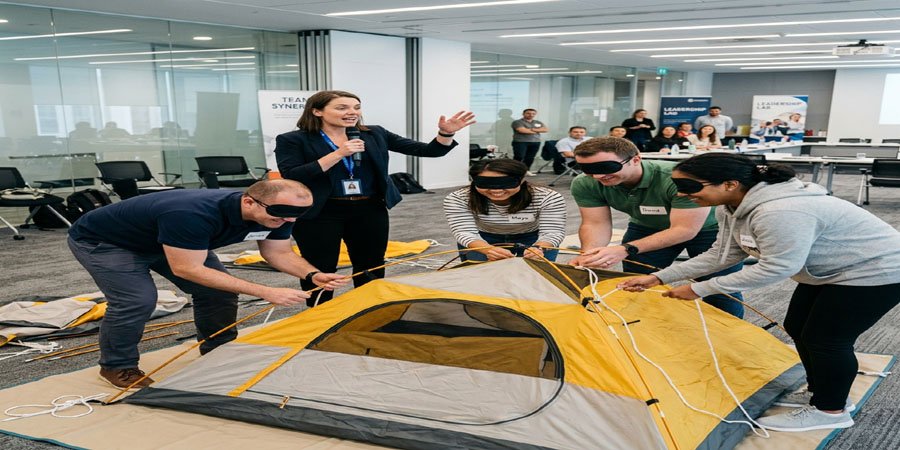
Do you want to conduct the Frostbite Game with your teams?
This game is based on experiential learning, where people learn by doing instead of only listening. It also uses problem-solving theory because participants must make decisions with limited time, materials, and information. The activity connects to group dynamics since members must communicate, assign roles, and adjust their plans under pressure. It also reflects leadership development because informal leaders often emerge when a challenge feels urgent.
In this article, let’s see how you can conduct this activity with your teams.
Here is an overview of the sections in this article:
- Objective of the Activity
- 5 Variations of the Frostbite Game
- Tips for Successful Facilitation
- Frequently Asked Questions about the Exercise
So, let’s get started!
Objective of the Activity
The Frostbite Game helps participants practice teamwork in a high-pressure but low-risk setting. It is simple to set up, yet it reveals how people communicate when the task feels unclear.
Let’s look at the key objectives you can focus on during this exercise.
Revealing Leadership and Team Roles
The exercise makes leadership visible because pressure pushes people to act. Some members organize tasks, while others test ideas, watch time, manage supplies, or support morale. By observing these patterns, facilitators can help participants see how roles emerge without formal titles. This creates a useful discussion about shared leadership, flexible responsibility, and trust during uncertain work under pressure.
Strengthening Communication Under Constraints
Participants must explain ideas fast, listen closely, and respond without long debates. Since the challenge includes limits, unclear plans can quickly waste time. This helps members notice how tone, clarity, timing, and feedback affect results. After the exercise, they can connect those lessons to workplace moments where people must share updates, solve issues, or make quick decisions.
Encouraging Creative Problem-Solving
The activity pushes participants to think beyond obvious solutions. They must use simple supplies in new ways, which makes creativity practical instead of abstract. Members often test a design, fail quickly, and improve it before time runs out. This builds confidence in experimentation, especially when work projects require fresh thinking, fast learning, and calm action.
Building Trust Through Collaboration
The challenge works best when members depend on each other. One person may see a risk, another may notice a design fix, while someone else keeps the process moving. This shared responsibility builds trust because everyone contributes to the outcome. The debrief helps participants name behaviors that increased confidence, reduced confusion, and made collaboration feel safer.
Improving Decision-Making in Pressure Situations
Limited time forces participants to make choices before they feel fully ready. They must decide what to build, who does each task, and when to stop planning. This mirrors real work, where perfect information is rare. The exercise helps members reflect on how they balance speed with quality, manage risk, and stay focused.
5 Variations of the Frostbite Game
Here are 5 variations of the Frostbite Game for your teams.
#1. Classic Frostbite Game
In this classic version, participants imagine they are stranded in freezing conditions and must build a shelter fast. The goal is to create a stable structure that can protect a small object from the “storm.”
Time: 10-20 minutes
Materials: Blindfolds, Index Cards, Masking Tape, Plastic Cups, Straws, and Timer
Participants: 3-8 people per group
Instructions
- Explain the scenario: the group is stranded in the Arctic; each team selects one leader who has “frostbite” and can only speak, not touch anything, while all other members have “snow blindness” and must wear a blindfold.
- Provide each team with one unassembled camping tent and a single blindfold for each non-leader.
- Instruct the team leader to verbally direct the blindfolded participants to build the tent; remind them they cannot physically assist or touch the materials.
- The winning team is the one that fully erects their tent the quickest, or follows the leader’s instructions best.
Debrief
- What helped your set move from planning to action?
- How did members decide which ideas to use?
- What would you change if you repeated the challenge?
You can also read:
50 Awesome Team Building Activities (Workplace)
#2. Silent Frostbite Challenge
This version removes spoken communication, so participants must rely on gestures and visual cues. It highlights how much teamwork depends on shared understanding beyond words.
Time: 10-20 minutes
Materials: Blindfolds, Paper, Tape, Rubber Bands, Craft Sticks, and Timer
Participants: 3-8 people per group
Instructions
- Explain the scenario: each team is stranded in the Arctic, with one member as the leader who has “frostbite” and cannot touch anything, while all other members have “snow blindness” and must wear blindfolds.
- Provide each team with one unassembled camping tent and a blindfold for every non-leader member, then announce that all instructions must be given using only nonverbal sounds, gestures, or taps—no spoken words allowed.
- The team leader guides blindfolded members to assemble the tent using only these nonverbal cues; the leader must not physically touch the materials.
- The winning team is the one that builds their tent quickest with nonverbal guidance, or best follows the leader’s nonverbal instructions.
Debrief
- How did silence change the way you contributed?
- What signals helped everyone understand the plan?
- Where did confusion appear during the build?
#3. Blind Builder Frostbite Game
In this variation, several participants must work together to guide one blindfolded builder. The activity emphasizes coordinated communication, listening, and trust when multiple people are responsible for directing the same task.
Time: 10-20 minutes
Materials: Blindfolds, Pipe Cleaners, Paper Cups, Tape, and Timer
Participants: 3-8 people per group
Instructions
- Explain that the group is stranded in the Arctic. Select one blindfolded participant as the builder; the others can see but cannot touch the materials.
- Provide each team with the materials and an unassembled structure that the builder must construct.
- Have the team members verbally guide the blindfolded builder, but they must coordinate with one another and avoid giving conflicting instructions.
- Start the timer and have the builder complete the structure using only the team’s verbal directions; the team that finishes first or produces the closest match wins.
Debrief
- How did your team coordinate its directions?
- What happened when different members gave conflicting instructions?
- What did this reveal about communication and teamwork in your workplace?
#4. Limited Supplies Frostbite Game
This version gives each set fewer materials than expected, which creates a sharper resource challenge. Participants must prioritize, adapt, and avoid wasting time on ideas that need supplies they do not have.
Time: 10-20 minutes
Materials: Blindfolds, Paper Clips, Cardboard Pieces, String, Tape, and Timer
Participants: 3-8 people per group
Instructions
- Tell each team they are stranded in the Arctic but with even fewer tent pieces provided; give only select parts of the tent and no extra supplies.
- Assign one team leader with “frostbite” (can only give verbal instructions, not touch anything) and blindfold all other members as having “snow blindness.”
- The team leader must verbally guide the blindfolded team to assemble the tent with the limited components available.
- The winning team is the one that completes their tent fastest using the partial materials, or best follows the leader’s instructions despite the constraints.
Debrief
- How did limited resources affect your choices?
- Which material became most valuable during the challenge?
- What workplace situations feel similar to this constraint?
#5. Role-Based Frostbite Game
In this version, participants receive assigned roles that shape how they work together. It helps people practice coordination when responsibilities are clear but time remains tight.
Time: 10-20 minutes
Materials: Blindfolds, Role Cards, Paper, Tape, Building Blocks, and Timer
Participants: 3-8 people per group
Instructions
- Assign each participant a distinct role using role cards, such as planner, builder, timekeeper, or observer, then appoint one as the team leader who has “frostbite” and can only speak, not touch.
- All non-leader members must put on blindfolds to simulate “snow blindness,” while the leader stands aside and gives only verbal guidance.
- The team works together to assemble an unassembled camping tent, with each member contributing as their role allows under the leader’s spoken instructions.
- The team that erects the tent fastest, or best follows the leader’s instructions while working within their roles, wins the challenge.
Debrief
- How did assigned roles affect collaboration?
- Which role felt most helpful during the task?
- What happens at work when roles are unclear?
Want to Develop Leaders at Every Level of Your Organization?
If you want a practical system to develop leaders at all levels, get this master guide and apply our proprietary ZIGN Framework™ of Leadership:
Looking for Unique Team Building Activities?
If you want unique activities that help your workforce grow through every stage of team development, get this guide:
Need Fresh Team Building Activities Every Month?
If you are a busy leader, get 5 unique, fully customizable activities every month—no preparation or trainer required.
Tips for Successful Facilitation
A strong facilitation plan helps the Frostbite Game feel fun, safe, and useful. Your role is to guide the process, observe behavior, and connect the activity to real work.
Use these tips to make the experience clear from start to finish.
Set a Clear Scenario
Start with a short story that explains the challenge in simple terms. For example, participants are stranded in freezing weather, so they must build a shelter before the storm arrives. Keep the story brief because the activity should move quickly. A clear scenario gives people a shared purpose, which reduces confusion. It also makes the task more engaging without turning the session into a long performance.
Keep the Rules Simple
Simple rules help participants focus on collaboration instead of trying to decode instructions. Explain the goal, time limit, materials, and testing method before the timer starts. Avoid adding too many conditions because that can slow action. If you use variations, introduce only one major twist at a time. This keeps the session fair, practical, and easy to repeat during meetings or workshops.
Observe Behaviors, Not Personalities
During the build, watch what people do rather than judging who they are. Notice who asks questions, who includes quieter voices, and who helps the group recover after a failed idea. These behaviors give you useful debrief points without making anyone feel labeled. This approach keeps the conversation respectful. It also helps participants discuss teamwork patterns in a constructive way.
Protect Psychological Safety
People take better risks when they know mistakes will not be punished. Before the activity starts, remind everyone that the goal is learning, not perfection. Celebrate creative attempts, even when the final structure falls. If one person dominates, step in gently by inviting others to speak. A safe tone helps participants share honest reflections during the debrief, which makes the exercise more valuable.
Link the Debrief to Real Work
The debrief turns a fun challenge into a practical learning moment. Ask participants how the activity connects to deadlines, unclear tasks, limited resources, and shifting roles. Encourage them to name one behavior they want to use in future projects. Keep the discussion focused on action, not blame. This helps people leave with lessons they can apply right away.
Final Words
The Frostbite Game is a simple activity that can reveal powerful teamwork patterns. It gives participants a chance to practice communication, leadership, problem-solving, and trust in a short session. You can use the classic version or adapt it with a variation that fits your goals. The key is to keep instructions clear, observe carefully, and run a thoughtful debrief. With the right setup, this exercise can make team learning active, memorable, and practical.
FAQ: Frostbite Game
You might have these questions in mind.
What is the Frostbite Game?
The Frostbite Game is a team building exercise where participants build a shelter using limited materials. The scenario usually involves surviving cold weather, which adds urgency to the task. It helps people practice communication, leadership, creative thinking, and decision-making. The activity works well in meetings, workshops, retreats, and training sessions because it is quick to run.
How long does the Frostbite Game take?
The activity usually takes 10 to 20 minutes for the build itself. You should also allow 5 to 10 minutes for setup, testing, and debriefing. A short version can fit into a regular meeting. A longer version works better for training sessions where you want deeper reflection on teamwork behaviors.
What materials do I need for the Frostbite Game?
You can use simple office or craft supplies. Common options include paper, tape, straws, index cards, cups, rubber bands, string, and craft sticks. The exact items are flexible, so use what you already have. Make sure each set gets similar supplies if you want the challenge to feel fair.
Can the Frostbite Game work for remote teams?
Yes, the activity can work online with a few changes. Ask participants to gather basic household items before the session, such as paper, tape, cups, and pens. Place people in breakout rooms with clear instructions. They can build on camera, then show their structure during the debrief. Keep timing tight.
What skills does the Frostbite Game develop?
The exercise develops communication, collaboration, leadership, planning, creative problem-solving, and adaptability. It also helps people notice how they respond to pressure. Some participants may focus on speed, while others may focus on quality. The debrief helps connect those patterns to real workplace situations, such as deadlines, role confusion, or limited resources.
Like this article on the “Frostbite Game for Teams”? Feel free to share your thoughts.
