
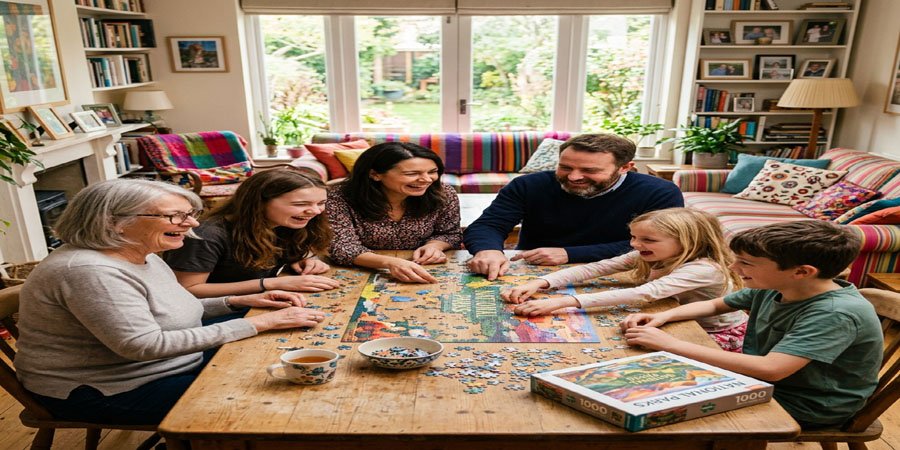
Are you in search of Family Team Building Activities?
Shared activities can help relatives talk more, laugh more, and solve small challenges together. They also build trust in a simple way that feels natural at home. You do not need special skills to make these moments meaningful. A short activity can turn an ordinary evening into a memory.
In this article, let’s see some Family Team Building Activities.
Here is an overview of the sections in this article:
- Key tips to help you plan smooth, enjoyable activities at home.
- Ten easy ideas with instructions and debrief questions.
- Frequently Asked Questions to help you choose what fits your family.
So, let’s get started!
What Should You Consider Before Conducting These Activities?
Before you begin, look at these simple tips to make each activity smooth, safe, and fun.
Match the Activity to Ages Present
Think about the ages in the room before you start. Younger children may need simpler tasks with movement. Older kids may enjoy light strategy. Adults should support without taking over. A good fit keeps everyone involved, comfortable, and willing to join from start.
Keep Instructions Short and Clear
Clear directions help everyone begin with confidence. Use short sentences and show one example if needed. Avoid long explanations that slow the mood. When people know what to do, they can focus on listening, laughing, sharing ideas, and working well together.
Choose a Comfortable Space First
Pick a space with enough room to move, sit, and talk easily. Remove anything breakable if the activity includes motion. A calm setting reduces stress. When people feel relaxed in the space, they take part more freely and stay engaged.
Focus on Connection Over Competition
A little competition can add energy, though connection should stay first. Encourage cheering, listening, and shared problem-solving. Praise effort, not just results. When the goal is bonding, everyone feels included, even if one person is quicker, louder, or more confident.
Plan for Quick Reflection Afterward
Save a few minutes at the end for reflection. Ask what felt fun, what felt hard, and what helped most. This short conversation turns play into learning. It also helps family members notice strengths, communication habits, and ways to support each other.
10 Family Team Building Activities
Here are some Team Building Activities that you can try with your family.
#1. Human Knot Lite
This quick challenge helps relatives practice patience, communication, and gentle problem-solving. It works well in a living room or backyard since everyone stays active while solving a shared puzzle.
Time: 10-20 minutes
Materials: None
Participants: 4-8 people per group
Instructions
- Ask everyone to stand in a circle and reach across to hold two different hands.
- Set a goal to untangle the team without letting go, while keeping movements slow and safe.
- Encourage people to talk through steps clearly. For example, one person may say, “Step under this arm first.”
- Stop when everyone forms a circle again or when the team creates the best possible shape.
Debrief
- What helped you stay calm during the challenge?
- How did communication affect the outcome?
- What would you do differently next time?
You can also read:
50 Awesome Team Building Activities (Workplace)
#2. Cup Stack Relay
This activity builds planning skills through a fast stacking challenge. Family members must coordinate their actions well if they want to finish within the time limit.
Time: 10-20 minutes
Materials: Plastic Cups and Table
Participants: 3-8 people per group
Instructions
- Place cups on a table and explain the target shape before the round begins.
- Have the group take turns adding one cup at a time until the structure is complete.
- Add a rule that no one may speak during one round. For instance, players can use hand signals only.
- Run a second round with talking allowed, then compare which approach worked better.
Debrief
- How did silent communication change the experience?
- What strategies made the stacking easier?
- When did you feel most supported by others?
#3. Story Circle Build
This warm activity strengthens listening and creativity through shared storytelling. It is especially useful when you want a calm option that still encourages every person to contribute.
Time: 10-20 minutes
Materials: Timer
Participants: 3-8 people per group
Instructions
- Seat everyone in a circle and choose a simple opening line for the story.
- Invite each team member to add one sentence when the timer reaches their turn.
- Encourage details that connect to earlier ideas. For example, someone can bring back a lost map mentioned before.
- End after several rounds, then summarize the full story together in one final sentence.
Debrief
- What made it easier to build on another person’s idea?
- Which part of the story showed the best listening?
- How did the shared story surprise you?
#4. Blindfold Block Builder
This exercise improves trust because one person builds while others guide with words. It also shows how clear directions can prevent confusion during a simple task.
Time: 10-20 minutes
Materials: Blindfold, Building Blocks, and Table
Participants: 3-8 people per group
Instructions
- Place blocks on a table, then blindfold one person while others stand nearby.
- Ask the team to guide the blindfolded person toward making a small tower using voice directions only.
- Remind everyone to give one instruction at a time. For example, say, “Move your hand left two inches.”
- Switch roles after each short round so several people experience giving and receiving guidance.
Debrief
- What type of direction was easiest to follow?
- How did trust affect the builder’s confidence?
- What did this show about giving clear guidance?
#5. Puzzle Piece Hunt
This activity mixes movement with cooperation in a very simple format. It works well for families who enjoy quick searching games with a shared goal.
Time: 10-20 minutes
Materials: Simple Puzzle and Timer
Participants: 3-8 people per group
Instructions
- Hide puzzle pieces around one room before the activity starts.
- Tell the group to find all pieces within the time limit, then assemble the puzzle together.
- Add a communication rule for one round. For instance, each person must announce where they already looked.
- Finish when the puzzle is complete, then celebrate the shared success with a cheer.
Debrief
- How did you divide the search in a helpful way?
- What communication habit improved the hunt?
- What would make the task smoother next time?
#6. Marshmallow Tower Sprint
This hands-on challenge encourages planning, testing, and fast adjustment. It is fun because small design choices can change the result in surprising ways.
Time: 10-20 minutes
Materials: Marshmallows, Toothpicks, and Table
Participants: 3-8 people per group
Instructions
- Give materials to each group and explain that the goal is to build the tallest free-standing tower.
- Allow a few minutes for planning before anyone starts building.
- Encourage testing during the round. For example, families can try a wide base if the top keeps falling.
- Measure the final towers at the end, then discuss what designs stayed stable.
Debrief
- What planning choice had the biggest impact?
- How did your ideas change during the build?
- What did you learn about working under time pressure?
#7. Pass the Drawing
This light game helps people build on each other’s ideas without needing artistic skill. It often leads to laughter because each picture changes in unexpected ways.
Time: 10-20 minutes
Materials: Paper, Markers, and Timer
Participants: 3-8 people per group
Instructions
- Give each person a sheet of paper and ask them to start a simple drawing.
- After one minute, have teams pass papers to the next person for additions.
- Repeat several rounds until each drawing returns to its starting artist. For example, a house may become a space station.
- Invite everyone to share the final pictures and describe how the image changed over time.
Debrief
- How did it feel to continue someone else’s idea?
- What helped you stay flexible during the activity?
- Which drawing change was most memorable?
#8. Silent Line-Up
This challenge teaches nonverbal communication in a playful way. It is great for opening a gathering since it gets everyone moving right away.
Time: 10-20 minutes
Materials: None
Participants: 3-8 people per group
Instructions
- Ask everyone to line up in a specific order without speaking.
- Choose an order such as birthday month, height, or shoe size.
- Remind the group to use gestures only. For instance, someone can point to a calendar month on their fingers.
- Check the final order aloud after the line is complete, then try a harder category.
Debrief
- What nonverbal signals worked best?
- When did confusion happen during the line-up?
- How did the activity change your attention to others?
#9. Compliment Toss
This simple activity builds warmth through positive words and quick sharing. It is especially helpful when you want a short exercise that leaves everyone feeling noticed.
Time: 10-20 minutes
Materials: Soft Ball
Participants: 3-8 people per group
Instructions
- Ask everyone to stand in a circle with one soft ball.
- Instruct the team to toss the ball to one person at a time while sharing a sincere compliment.
- Encourage specific praise. For example, say, “I like how you helped clean up after dinner yesterday.”
- Continue until each person has received at least one compliment, then start a second round if time remains.
Debrief
- How did specific praise change the mood?
- What made a compliment feel meaningful?
- How can you use this habit outside the activity?
#10. Mission Possible Challenge
This activity gives the family a quick problem to solve with limited supplies. It promotes planning, role-sharing, and creative thinking in a short burst.
Time: 10-20 minutes
Materials: Tape, Paper, Straws, and Coins
Participants: 3-8 people per group
Instructions
- Present one mission, such as building a bridge that can hold several coins.
- Give the group the materials, then set a clear time limit for planning and building.
- Ask people to choose roles before they begin. For instance, one person can test while another folds paper.
- Review the final structure together and note what made it work or fail.
Debrief
- How did role-sharing shape the result?
- What creative idea helped most during the mission?
- What would you improve with one more round?
Want to Develop Leaders at Every Level of Your Organization?
If you want a practical system to develop leaders at all levels, get this master guide and apply our proprietary ZIGN Framework™ of Leadership:
Looking for Unique Team Building Activities?
If you want unique activities that help your workforce grow through every stage of team development, get this guide:
Need Fresh Team Building Activities Every Month?
If you are a busy leader, get 5 unique, fully customizable activities every month—no preparation or trainer required.
Final Words
Short activities can create strong moments of connection at home. The best ones are easy to explain, quick to run, and fun for many ages. You can use them during weekends, gatherings, or even after dinner. Try one idea first, then notice what your family enjoys most. With a little time, shared play can build better communication and trust.
FAQ: Family Team Building Activities
You might have these questions in mind.
Are these activities good for mixed ages?
Yes, many of these ideas are suitable for children, teens, and adults. Adjust the rules so everyone can participate comfortably, regardless of age. Younger kids might prefer simple actions or shorter turns. Older family members can take on planning or troubleshooting, making the experience meaningful for every age group.
How often should families do these exercises?
Doing these exercises once a week works well for most families. Consistency is more important than activity length, so start with a regular schedule. One brief session can become a positive family habit. Pick a time that fits, like a weekend afternoon or an evening during the week.
What if someone does not want to join?
Begin with a low-pressure activity that feels playful and easy. Avoid forcing anyone to join right away; simply invite them. Sometimes, just watching can help someone feel more at ease. Offer a small role, such as timekeeper or cheerleader, to gently include those who feel hesitant.
Can these family team building activities work in small spaces?
Yes, several of these activities can be set up right in your living room, dining space, or yard. Choose games with minimal movement when the space is limited. Storytelling challenges are a great indoor pick for tight areas. Always clear the area first so everyone can participate and concentrate.
What is the main goal of these activities?
The main purpose is to build stronger connections between family members through shared experiences. These activities help everyone listen better, cooperate more, and enjoy time together. They reveal strengths often missed in daily routines. Over time, small group challenges can foster better trust, communication, and appreciation at home.
Like this article on “10 Family Team Building Activities”? Feel free to share your thoughts.
